The Fourth Fire Drill in Five Weeks
N-able released Hotfix 4 for N-central on September 5, 2026, updating the platform to version 2026.3.1.14 to close CVE-2026-86218, a critical, pre-authenticated remote code execution vulnerability. Read that description again: pre-authenticated. An attacker needs no valid credentials to trigger it. That alone would justify urgency, but the detail that should worry any security leader more is the cadence. This is the fourth emergency hotfix N-able has issued for N-central inside five weeks, a pattern that points to a platform under sustained scrutiny from researchers and attackers alike, not an isolated one-off bug.
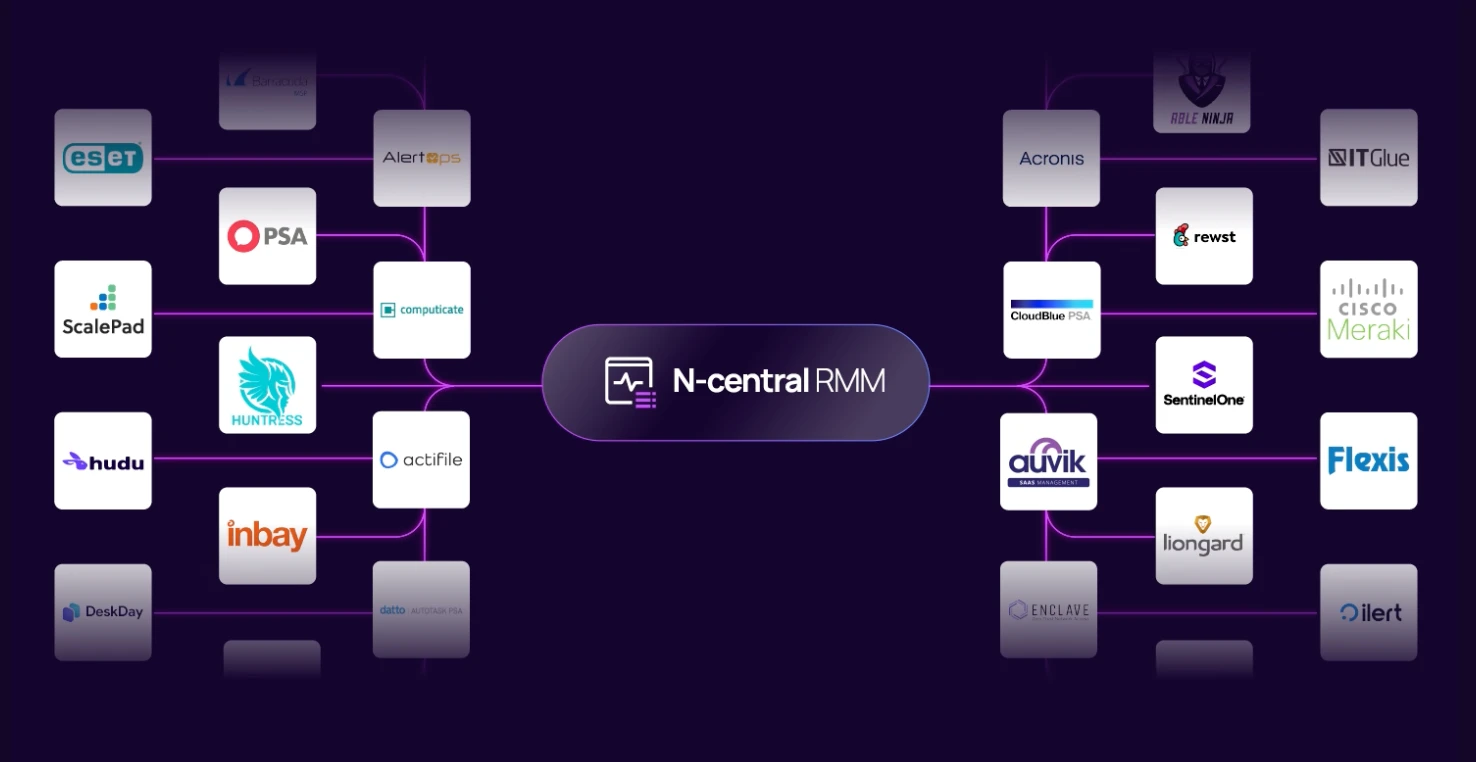
N-central is remote monitoring and management software, the kind of tool a managed service provider installs to administer dozens or hundreds of client networks from a single console. A vulnerability in that console carries a blast radius that extends well beyond any single company's line-of-business app, reaching every client the MSP manages through that instance simultaneously. Four emergency patches in five weeks for a tool with that kind of reach is the sort of signal that belongs on a CISO's risk register even if your own company has never heard of N-able and has no idea which vendor its outsourced IT team relies on.
The Vendor and the Field Disagreed on Exploitation
N-able's public advisory stated the company had no confirmation that CVE-2026-86218 had been exploited in production environments. At roughly the same time, a separate urgent customer notice from N-able described the same vulnerability as having been observed being exploited in the wild and explicitly designated it a zero-day. Those two statements do not reconcile easily, and for a customer trying to decide how fast to escalate an emergency patch internally, that inconsistency matters as much as the CVSS score does.
Security teams making triage decisions need a single, authoritative signal from a vendor, not conflicting messages across different communication channels. When the public-facing advisory understates urgency relative to what customers are being told privately, it pushes the burden of figuring out the real severity onto the customer, at the exact moment speed matters most. If you run N-central, treat the private notice as the operative one and patch as though exploitation is confirmed, because acting on the more cautious reading costs you nothing and acting on the less cautious one could cost you your client base.
Found on Discord, Not Through the Advisory Pipeline
Huntress, the security firm that flagged the vulnerability publicly, learned about it from a Discord post made by an N-able employee in the MSPGeek community, and that post went out ahead of N-able's own official hotfix announcement. In other words, the fastest, most reliable early signal about a critical pre-authenticated RCE in widely deployed MSP infrastructure came from an informal community channel rather than the vendor's structured disclosure process, and it reached researchers before it reached the customers who most needed to hear it.
That is not a criticism of the employee, who likely did the community a genuine service by getting word out early. It is, however, a structural problem for anyone trying to build a repeatable vulnerability intelligence process around vendor advisories alone. Security teams cannot staff an operations function around monitoring Discord servers for accidental early warnings from vendor employees. What it does mean is that MSPs and MSP-dependent enterprises benefit from working with security vendors and threat intel feeds that actively monitor informal channels alongside formal ones, because the structured advisory pipeline is demonstrably not always first to know.
Your MSP's Patch Status Is Now Your Risk
Most enterprises that use a managed service provider have no direct visibility into which RMM platform that provider runs, let alone whether it has applied the latest hotfix. That opacity was tolerable when RMM tools were treated as low-risk back-office plumbing, invisible to anyone outside the MSP's own operations team. It stopped being tolerable once RMM platforms became the preferred initial access vector for ransomware crews, precisely because compromising one MSP console yields lateral access into every client network it manages, a pattern security researchers have documented repeatedly over the past several years across multiple RMM vendors, not just N-able.
N-able recommended that customers running on-premises N-central deployments upgrade to 2026.3 HF4 immediately and separately audit user accounts for unexpected additions, which is itself a tacit acknowledgment that unauthorized account creation is a realistic outcome of this flaw. If your organization outsources any part of IT operations, ask your provider directly whether they run N-central, whether HF4 is applied, and whether they have audited for new or modified administrative accounts created since the vulnerability window opened five weeks ago.
What This Means for Vendor Governance
Four emergency hotfixes in five weeks for one product is a data point worth carrying into your next vendor risk review, whether or not you use N-able directly. It is a reminder that RMM and IT management platforms deserve the same scrutiny you apply to identity providers and cloud infrastructure, because functionally they occupy a similar position: privileged, cross-tenant access to systems that matter. Vendor questionnaires that ask about SOC 2 certification once a year miss this kind of pattern entirely.
The practical move for enterprise tech leaders is to add a standing question to quarterly vendor and MSP reviews: how many emergency security patches has this platform required in the trailing twelve months, and what was the average time between advisory and patch availability on our side. A rising patch cadence is not automatically disqualifying on its own, since more researcher scrutiny can reflect a platform's growing prominence rather than declining engineering quality. Still, it is a trend worth a direct conversation with your provider before the fifth hotfix arrives, and worth documenting now while the pattern is fresh and the stakes are still hypothetical rather than realized.