A narrow bet, well aimed
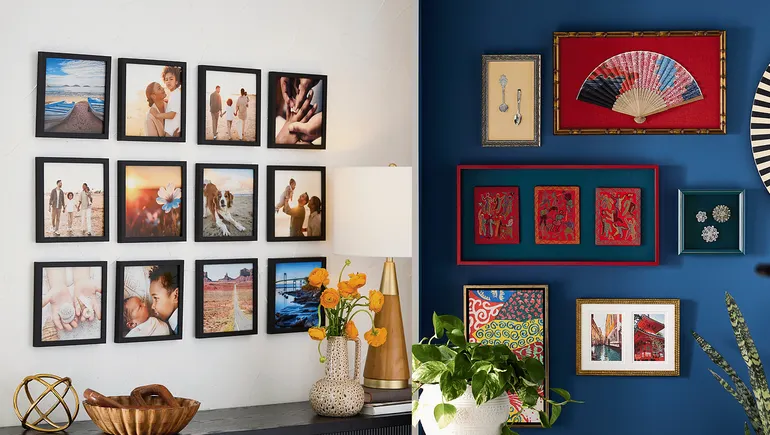
Michaels announced this week that it has launched an online 3D and augmented reality frame builder, giving shoppers a way to preview custom frame moulding in their own space before they commit to an order they cannot easily undo. The tool works alongside a QR code option that brings the same visualization into physical stores, so a shopper standing in front of a wall of moulding samples can hold up a phone and see the finished piece rendered against their own wall, rather than trying to imagine the outcome from a two-inch corner swatch and a mental leap of faith.
The launch is not a standalone tech demo shipped to generate a headline. It arrived bundled with a new Architectural Digest moulding collection, an initial run of 5 styles with a stated plan to expand to 15, and more than 200 new frame options spanning modern, bohemian, classic, and romantic aesthetics. That bundling matters a great deal: Michaels is using the visualization tool to de-risk a broader merchandising bet on a premium collection, not shipping AR for its own sake as a marketing flourish disconnected from the underlying product strategy.
Why framing is exactly the right use case
Custom framing is a slow, considered, visually driven purchase with a real return problem built into it: a customer who guesses wrong on moulding color or width against their art and their wall ends up disappointed with a finished piece they cannot easily send back for a refund. That is a fundamentally different failure mode than a commodity SKU, where the AI question is usually search relevance or basket size. Here the AI question is confidence, plainly, whether the shopper genuinely trusts what they are about to spend real money on before the frame is even cut to size.
President and Chief Customer Officer Heather Bennett made that framing explicit in the announcement, describing the goal as empowering shoppers to bring their visions to life with what she called absolute confidence, delivered through the combination of a refreshed in-store experience and immersive 3D and AR visualization online. That is a specific, testable claim rather than marketing filler: fewer returns and fewer abandoned custom orders should follow, not simply a vague uptick in some undefined engagement metric that never ties back to the bottom line.
Visualization and conversation, not visualization versus conversation
Michaels is running this AR launch alongside Ask Mike, its Google-infrastructure shopping assistant, and the two tools are clearly aimed at different jobs rather than competing for the same use case. Ask Mike answers questions and narrows options through conversation; the AR builder resolves the final, highest-stakes decision through direct visual proof rendered in the customer's own space. Retailers chasing a single, unified AI strategy often try to force both jobs into one chat interface, which tends to produce an assistant that talks a convincing game but still leaves the shopper guessing at the actual visual outcome of their purchase.
The lesson for any retail CTO scoping an AI roadmap this year is to separate the discovery problem from the confidence problem before choosing a single tool to solve both. A chatbot is well suited to discovery, narrowing a large catalog down to a handful of relevant options quickly. It is poorly suited to building confidence on a visually specific purchase, where nothing beats letting the customer see the actual, literal outcome rendered against their own physical space before they commit to buying it.
The build cost question this raises
AR visualization tools carry a real, non-trivial engineering cost: rendering pipelines, mobile camera integration, and a content pipeline to keep hundreds of SKUs represented accurately in three dimensions, in this case scaling from an initial 5 moulding styles toward 15, plus more than 200 frame variants layered on top. That is not a weekend integration project, and it is exactly the kind of initiative that gets quietly deprioritized in favor of a cheaper chatbot rollout, unless leadership can tie it directly to a specific, high-margin category with a clearly visible confidence gap holding back sales.
Michaels picked custom framing because the category carries both of those traits at once: high margin per completed order, and a purchase decision that genuinely benefits from seeing the result before buying rather than after. Retailers evaluating similar visualization investments should run the same filter before greenlighting an AR build of their own, category margin multiplied by consideration length, rather than defaulting to AR simply because a competitor made an announcement first and created some competitive anxiety.
What to watch next
The metric that will tell us whether this bet actually pays off is not adoption of the AR tool itself but the downstream numbers Michaels does not typically disclose in a press release: custom-order return rates, average order value on framed pieces, and whether the Architectural Digest collection outsells comparable moulding lines that launched previously without any visualization tool attached to them. Absent that data, the launch reads as a well-targeted experiment rather than a proven win, and we would treat vendor claims about AR-driven conversion lift with real skepticism until Michaels actually reports a comparable quarter with hard numbers behind it.
For other specialty retailers selling considered, visually specific goods, furniture, cabinetry, flooring, window treatments, this is a cleaner playbook than most agentic commerce announcements we cover in a given week: identify the specific category where the customer's real hesitation is visual uncertainty rather than price or selection, and spend the AI budget closing that exact gap before chasing a general-purpose shopping assistant that solves a different problem entirely.