What changed
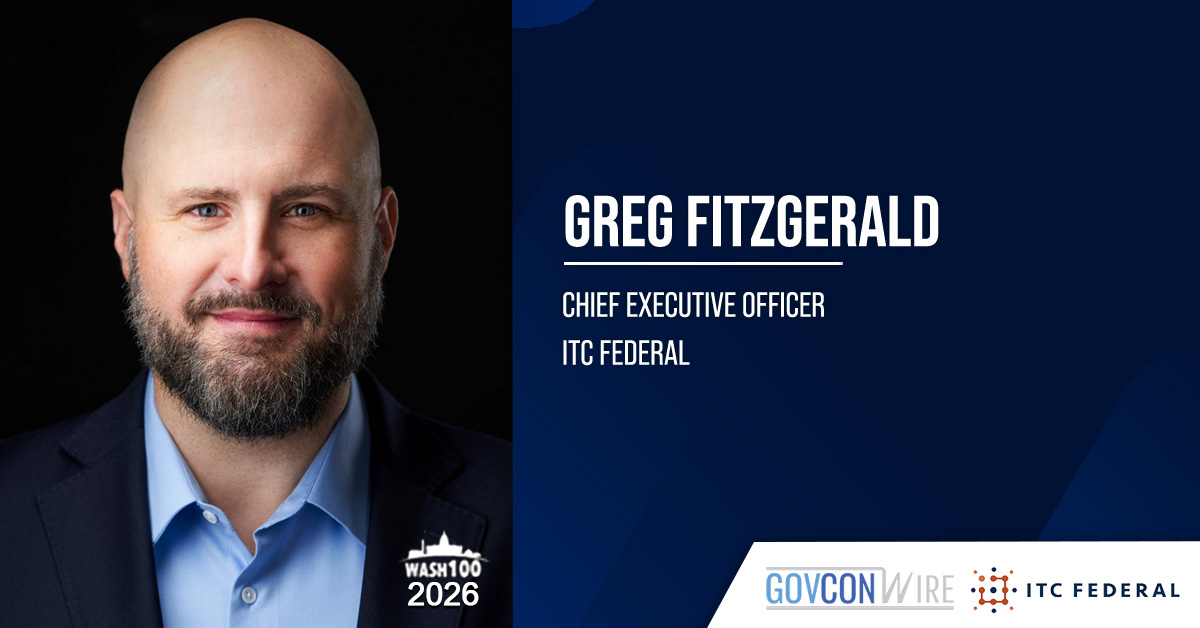
ITC Federal has acquired Capgemini Government Solutions and rolled it into a new operating division called ITC Digital Solutions. The move hands ITC the Salesforce and ServiceNow platform expertise, cloud modernization services and Databricks-based data engineering programs that Capgemini built inside its US public sector practice. ITC Federal CEO Greg Fitzgerald framed the deal as mission driven, saying it strengthens the combined company's ability to serve national security customers while adding depth in digital services and enterprise platforms federal partners rely on daily.
The acquired business carries relationships across the Department of Homeland Security, the Department of Justice and what the release calls the Department of War, alongside civilian agency work. ITC Federal already holds spots on the Missile Defense Agency's SHIELD contract, Treasury's Financial Management Quality Service Management Office Marketplace and NASA's SEWP VI vehicle, and it maintains Cybersecurity Maturity Model Certification 2.0 Level 2 status. Combining that access with Capgemini's platform teams gives ITC a broader shelf of modernization services to sell across the same agency relationships.
Why ITC wanted Capgemini's federal business
Federal buyers have spent the past two years pushing systems integrators toward outcomes that combine cloud migration, low-code automation and AI capability in a single accountable team, rather than stitching together specialists on separate task orders. Capgemini's US government unit had built exactly that mix, with Salesforce and ServiceNow implementation skill sitting alongside cloud and data engineering delivery. For ITC, buying that capability outright is faster than building it, and it removes a competitor from bids where ITC previously faced Capgemini directly.
It also reflects a harder commercial reality for global consultancies in the current federal market. Capgemini's parent has been trimming and reshaping its government-facing portfolio as procurement cycles lengthen and agencies favor smaller, more specialized integrators with cleared staff and existing contract vehicles. Selling the US government unit lets Capgemini concentrate capital on its commercial and international business, while ITC gets a ready-made national security delivery bench without the multi-year ramp of organic hiring.
The roll-up pattern
This is not ITC Federal's first acquisition. The company bought Apriva ISS earlier, and the Capgemini Government Solutions deal extends the same playbook: acquire capability adjacent to existing agency relationships, then cross-sell it through established contract vehicles. That pattern matters more than any single transaction, because it signals ITC intends to keep consolidating rather than grow organically inside a federal IT services market that analysts already describe as fragmented among dozens of mid-tier integrators competing for the same modernization dollars.
Expect more of this. Mid-tier federal integrators sitting on strong contract vehicle access but thin platform-specific expertise, and platform-heavy shops without deep agency relationships, are natural acquisition targets for each other. CIOs and program executives who track their systems integrator partners as fixed points on an org chart should instead treat them as consolidation targets, because the account team and delivery model they signed up for can change ownership with little warning.
What agencies with active contracts should do now
Any agency with an active Capgemini Government Solutions task order should confirm novation and contract vehicle continuity before assuming delivery continues unchanged. Deals like this typically require formal novation agreements transferring contract rights to the new entity, and the timeline for that paperwork does not always match the announcement date. Program managers should ask their contracting officer directly whether novation is in progress, and should not wait for the next status report to surface a gap.
Beyond paperwork, agencies should reassess key personnel commitments. Federal contracts frequently name specific architects, security leads or delivery managers as contractually required personnel, and acquisitions are a common point where those individuals leave for other opportunities. A CIO who assumes the statement of work protects them from turnover risk during an ownership change is taking on exposure they have not priced. Building a short retention and knowledge-transfer check into the next 90 days is the cheapest insurance available.
The commercial parallel: vendor concentration risk
Enterprise CIOs outside government should read this as a preview of their own systems integrator risk. The same forces reshaping federal IT services, thin margins, procurement pressure to bundle platform and cloud work, and buyers who reward scale over specialization, are active in commercial consulting too. When a mid-tier integrator you rely on for ERP or CRM implementation gets acquired, the delivery team, pricing structure and even the technical approach can shift inside a single fiscal quarter.
The practical defense is the same whether the buyer is a federal agency or a Fortune 500 IT organization: know which of your critical vendors are acquisition targets, keep architecture documentation independent of any single integrator's tooling, and build contract language that survives an ownership change rather than assuming your current point of contact will still hold the account next year. Vendor concentration risk now shows up in deal announcements almost every quarter, which makes it an operating reality CIOs must budget attention and process for, not a distant scenario worth revisiting only when it happens to land on their own vendor list.
What this means for your vendor roster
The ITC Federal and Capgemini Government Solutions deal is a narrow transaction on its face, one integrator buying another's government unit. Its real signal is broader: the systems integrator layer that enterprises depend on for ERP rollouts, platform migrations and modernization programs is consolidating, and that consolidation carries the same delivery and continuity risk agencies now have to manage with ITC. Whether the sector is federal contracting or commercial enterprise IT, the underlying economics pushing integrators toward scale, thin margins, rising compliance overhead and buyer preference for one accountable vendor over several specialists, are the same, and they are not going to reverse because one deal closes.
CIOs should treat this as a prompt to audit their own integrator dependencies this quarter, not next year's planning cycle. Identify which vendors are plausible acquisition targets given their size, ownership structure and specialization, confirm your contracts include novation and key-personnel protections, and keep your own architecture and process documentation independent of any single partner's delivery model or tooling choices. Assign a named owner inside IT procurement to track ownership changes across your top twenty vendors by spend, the same way finance already tracks counterparty credit risk. The next consolidation announcement in your sector will not come with much more warning than this one did, and the organizations that weather it cleanly will be the ones who already knew which relationships were exposed.