What Instacart actually bought
Instacart announced on July 16 that it acquired Arpalus, a computer vision company whose shelf intelligence technology was built specifically for grocery. It is Instacart's first acquisition of an Israeli company, and public estimates put the price in the tens of millions of dollars, though neither side disclosed terms. Arpalus turns quick video scans of store shelves into a real-time inventory picture. The pitch is not another dashboard for planners weeks after the fact. It is a live read of what is actually on the shelf, captured with the same phone a picker already carries, and reconciled against the retailer catalog so the gaps surface while a shopper is still in the aisle.
The technical claim is what makes the deal interesting. Arpalus says its models identify individual items with more than 95 percent accuracy on average, working through the conditions that break most retail vision systems: weak or unreliable in-store Wi-Fi, inconsistent lighting, and thousands of visually similar products packed tightly together. David McIntosh, Instacart's Chief Connected Stores Officer, framed the logic plainly, saying the company can now activate its shopper network to feed more accurate shelf information back into its models. That closed loop, capture to model to better capture, is the asset Instacart paid for, and it is far harder to replicate than the recognition algorithm itself.
The workforce becomes the sensor network
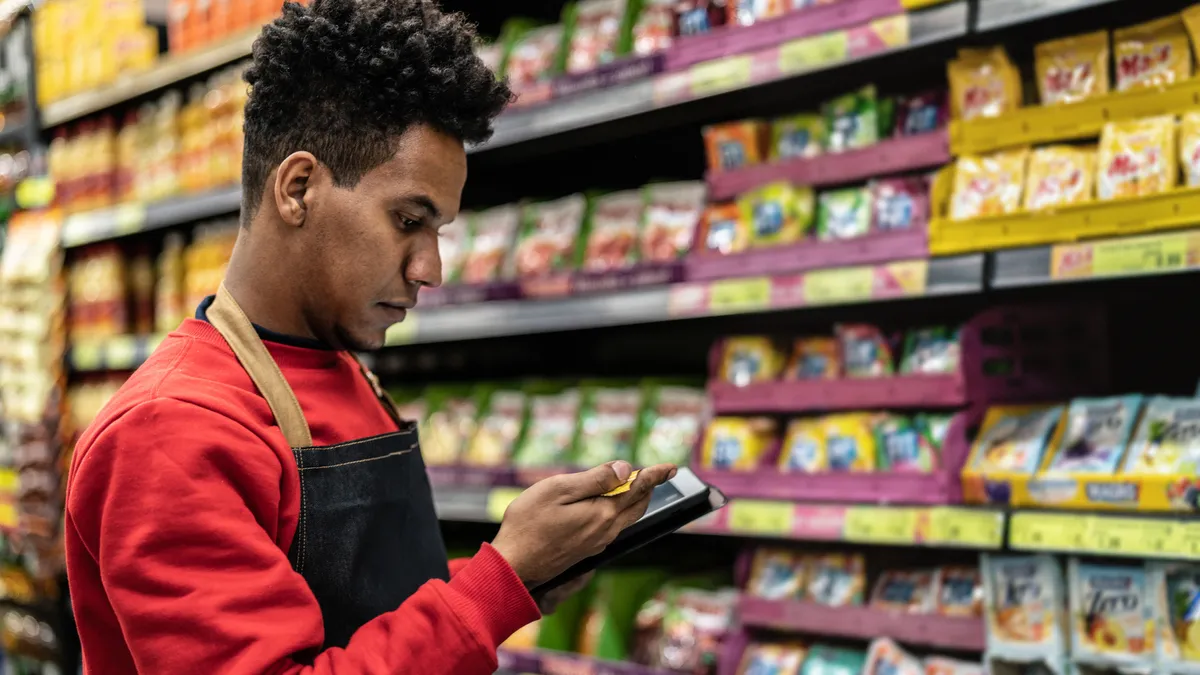
The strategic move is turning labor Instacart already pays for into a distributed sensing layer. Its roughly 600,000 shoppers visit large-format stores more than 15 times a day on average, generating over 10 million unique daily data points across the country. Most retail shelf-audit programs rely on fixed cameras, dedicated robots, or third-party field reps who visit a store on a schedule. Instacart already has people in thousands of stores every hour, holding a phone and opening the app. Bolting shelf capture onto that motion costs almost nothing incremental and scales with order volume rather than with capital expenditure on hardware.
This is the part competitors cannot easily copy. A vision startup can license a comparable model, and a retailer can buy fixed-camera coverage for one banner. Neither has a standing national workforce inside the aisles generating fresh imagery on every trip. The data compounds: more shoppers produce more shelf reads, which sharpen the models, which improve substitution and availability, which lifts order quality and volume, which puts more shoppers in more aisles. For a company that has spent years positioning itself as infrastructure for grocers, owning the sensing layer is the logical next control point over the physical reality of the store.
Out-of-stocks are the return on this deal
The business case is narrow and measurable. Undetected out-of-stocks and catalog gaps are the leading causes of customer dissatisfaction in grocery e-commerce, and they are expensive in ways that hide in the margin. A shopper who cannot find an item triggers a substitution the customer may reject, a refund, a support contact, or a churned order. Every one of those is a cost against a basket the retailer already discounted to win. Real-time shelf truth lets Instacart flag an empty facing before a picker wastes the trip, offer a smarter substitution, and keep the catalog honest about what is genuinely available right now.
This is also where the value spreads beyond Instacart. Consumer packaged goods brands spend heavily to confirm their products are on shelf, priced correctly, and not buried behind a competitor. Accurate, frequent, store-level shelf data is a product those brands will pay for, and Instacart already sells advertising and insights into that same audience. The acquisition quietly strengthens a second revenue line: shelf intelligence sold back to the suppliers whose out-of-stocks it detects. That dual payoff, cleaner fulfillment plus a saleable data asset, is why a tens-of-millions deal can pencil out quickly and why the price looks modest against the strategic surface it covers.
Physical AI is the framing to watch
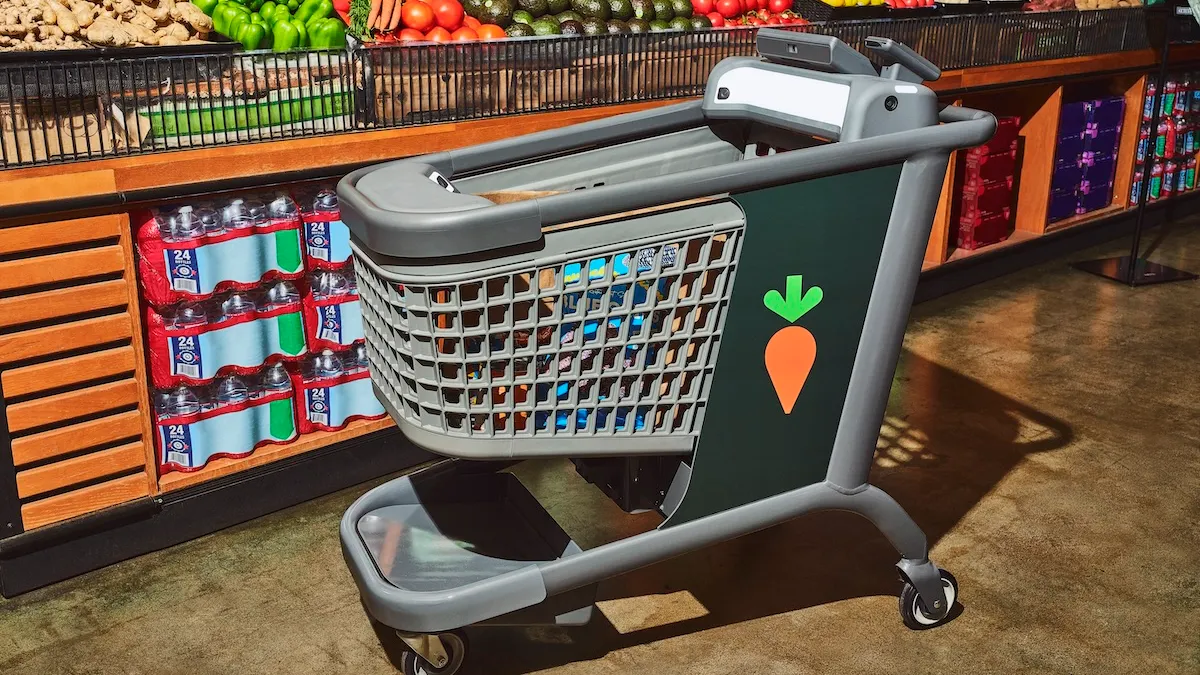
Instacart is deliberately using the phrase physical AI, and the Arpalus deal slots into an existing stack rather than starting a new one. The company introduced Store View in 2025 as its computer vision layer for retail inventory visibility, and Arpalus enriches it. The same models will support Caper Carts, the camera-equipped smart carts already deployed at Kroger, Schnucks, and ShopRite, where recognizing products in real time is the core function. Buying a specialist team that already solved recognition in messy store conditions accelerates all of those surfaces at once, instead of forcing Instacart to grind through the long tail of edge cases on its own.
The framing matters because it maps the competitive set. Instacart is now playing on the same field as Trax, Standard AI, and Simbe Robotics, alongside the shelf-scanning robots several grocers have piloted. The difference is the deployment model. Robots and fixed cameras carry hardware cost and coverage limits per store. Instacart's approach rides on phones and carts that are already in motion, which trades some control for enormous reach. For retail technology leaders evaluating shelf intelligence, this deal reframes the question from which robot to buy toward which data-collection model actually scales to every aisle you operate.
The build versus buy signal for retail and CPG
The clearest lesson for technology leaders is where the durable advantage sits. The recognition model is increasingly a commodity, available from multiple vendors and open research at accuracy levels that were frontier work two years ago. What Instacart could not buy off the shelf was a mechanism to collect fresh, labeled, in-aisle imagery at national scale, continuously, at near-zero marginal cost. That is why it acquired a team and a proven capture pipeline rather than simply licensing a model. If your roadmap includes shelf intelligence, the honest build-versus-buy question is about the data pipeline, and the algorithm is the easy part.
For CPG operators, the deal sharpens a dependency worth examining now. If Instacart becomes the most accurate real-time source of shelf truth across a large slice of grocery, brands will find themselves buying visibility into their own products from a platform that also runs the marketplace and the ad network. That is leverage. Suppliers should decide deliberately whether to rely on Instacart's data, invest in independent shelf measurement, or negotiate access terms before the dependency hardens. Waiting until the data is indispensable is the expensive path, and the clock on that decision started ticking with this acquisition.
What to put on your roadmap
Two questions deserve attention before this becomes standard infrastructure. The first is governance: who owns the shelf data a shopper captures inside a retailer's store. Instacart, the retailer, and the brand all have a claim, and the contracts that settle it will shape who monetizes the insight. Retailers signing or renewing Instacart agreements should treat shelf-data rights as a negotiated term rather than a default, because the party that controls the data controls the resulting analytics business. This is a commercial decision dressed up as a technical integration, and it is easy to concede by accident.
The second is production reliability. A 95 percent average accuracy claim is a headline figure, and grocery has a long tail of hard cases: private-label lookalikes, promotional packaging, seasonal resets, and poorly stocked aisles. The operational value depends on how the system degrades on that tail and how it handles disagreement between a shopper's capture and the system of record. Leaders piloting shelf intelligence should measure accuracy on their own worst aisles, not the vendor's demo. Instacart just bought a strong starting point, and the teams that win with it will be the ones that engineer the last few points of reliability into daily operations.