What Iceland Actually Deployed
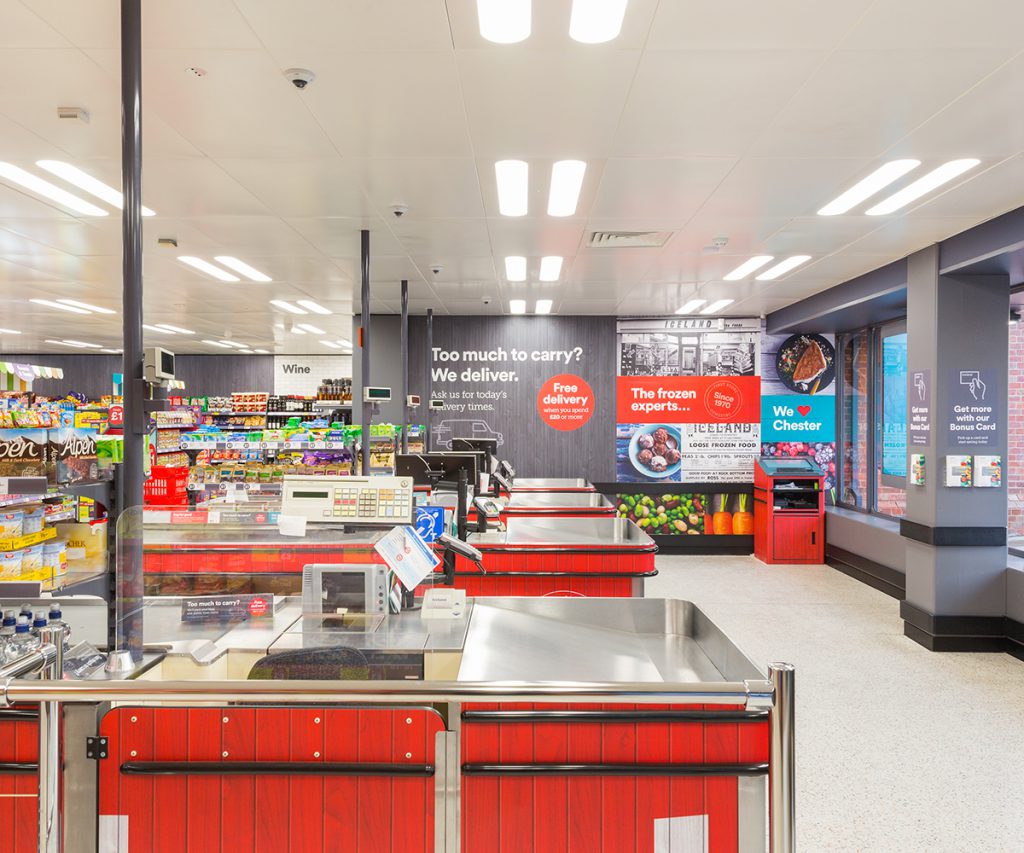
Iceland, the UK frozen food grocer that operates more than 1,000 stores, rolled out SAI's Vision AI platform across its 100 worst performing locations for shrink and theft. The system pairs computer vision with a generative AI layer SAI calls a visual language model, watching checkout lanes and aisles for missed scans, partial payments, walkouts, and concealment in real time. Rather than recording footage for after the fact review, the platform flags incidents as they happen and routes an alert to store staff immediately. Iceland had been losing close to 20 million pounds a year to theft and shrink before the rollout, a number large enough that even a partial improvement would register on the P&L.
The technology sits on top of Iceland's existing camera infrastructure rather than requiring a wholesale hardware replacement, which lowered the cost and speed of the rollout. SAI CEO Som Sinha described the goal as proving that retailers can reduce shrink, support colleagues, and improve store operations from a single platform rather than stitching together separate systems for security, workforce management, and compliance. That single platform framing matters commercially: retailers evaluating loss prevention AI are increasingly wary of point solutions that solve one narrow problem while adding another vendor relationship, another data pipeline, and another integration project to maintain.
The False Alert Problem Most Loss Prevention Tech Never Solves
Every retailer that has deployed camera based loss prevention knows the real failure mode has little to do with missing theft. It comes from drowning staff in false alarms until they start ignoring the system entirely. A door alarm that beeps for legitimate returns, a self checkout flag that fires on a bagging quirk rather than an actual missed scan, trains employees to tune out the technology within weeks. Iceland's 50 percent cut in false alerts is arguably the more important number in this rollout, because it determines whether staff keep trusting the system months after launch rather than only during the initial pilot period when everyone is paying close attention.
Iceland's head of loss prevention, Andy Edwards, put the goal in terms that speak directly to this dynamic: the retailer needed a system that could work alongside staff rather than operate behind them. That framing matters because loss prevention technology has a credibility problem with the store employees who are supposed to act on its alerts. A 90 percent response rate suggests Iceland's staff trust the flags enough to act on nearly all of them, a sharp contrast with systems where employees learn to wave off alerts because false positives make the tool more of a nuisance than a help.
The Money Behind the Eighty Percent Number
Iceland's roughly 20 million pound annual shrink bill puts the 80 percent reduction in concrete financial terms: a meaningful swing in operating margin concentrated in the 100 stores where losses were worst. Loss prevention rarely gets this kind of direct, quantified attention from finance leaders because the return on a surveillance system is usually diffuse and hard to isolate from other factors like store remodels, staffing changes, or seasonal demand shifts. Targeting the worst performing locations first, rather than rolling out uniformly across the estate, let Iceland isolate the effect of the technology and produce a number specific enough to defend in a budget review.
That approach offers a template for any retailer building the business case for loss prevention AI: start with the stores where the problem is largest and most visible, prove the return there, and use those numbers to justify expansion rather than asking finance to approve a full estate rollout on projected savings alone. Vendors pitching AI powered loss prevention will always show impressive demo footage of a caught shoplifter. What CFOs actually need before signing a multi year contract is a store level P&L comparison like the one Iceland is now in a position to produce for its own board.
The Workforce Trust Question Behind Every Surveillance Rollout
Any system that watches checkout lanes and aisles in real time inevitably raises questions about whether it is really about theft or about surveilling employees too. Retailers have stumbled here before: workforce monitoring tools pitched as productivity aids have triggered union grievances and bad press when employees discovered the same cameras tracking shoplifters were also being used to flag bathroom breaks or slow scanning speeds. Iceland's public framing, emphasizing that the system supports staff rather than watching them, is as much a labor relations move as a technology announcement, and it is one every retailer deploying similar tools should study before their own rollout draws the same scrutiny.
The distinction that matters in practice is scope: a system trained to flag missed scans and concealment at the point of transaction is a different proposition than one logging every employee's movement across a shift. Retailers that blur that line, intentionally or through vendor scope creep, invite exactly the backlash Iceland appears to be trying to avoid. Any CIO evaluating a similar platform should get explicit contractual limits on what the system monitors and how that data can be used internally, negotiated before procurement rather than after an employee relations complaint forces the conversation into the open.
How This Compares to Facial Recognition Missteps Elsewhere in Retail
Loss prevention AI has a mixed public record this year. Facial recognition systems deployed by other UK grocers have misidentified innocent shoppers as prior offenders, generating exactly the kind of headline risk that makes CFOs and legal teams nervous about approving similar technology. Iceland's system is architecturally different: it flags behaviors at the point of transaction rather than matching faces against a watchlist, which sidesteps the misidentification risk that has burned competitors. That distinction is worth making explicit in any vendor evaluation, because AI powered loss prevention covers a wide range of technical approaches carrying very different risk profiles.
Retailers shopping for loss prevention AI in the back half of 2026 should treat behavior detection systems and facial recognition systems as separate procurement categories with separate risk reviews, rather than interchangeable options from a single vendor shortlist. The reputational and legal exposure of a false facial recognition match, an innocent customer publicly accused of theft, is categorically worse than a missed alert on a genuine shoplifting incident. Iceland's results suggest the behavior detection approach can deliver strong numbers without carrying that specific risk, which should move it toward the top of the shortlist for risk averse retailers.
The Decision Loss Prevention Leaders Now Face
The practical decision in front of loss prevention and finance leaders now centers on rollout sequencing and vendor risk profile, since Iceland's numbers and a growing list of similar deployments across the sector have already made the case for AI powered monitoring on cost grounds alone. The remaining work is picking which stores go first, on what evidence base, and which specific technical approach, behavior detection, facial recognition, or a hybrid, carries the least legal and reputational exposure for a given customer base and jurisdiction.
Retailers still running loss prevention primarily on human observation and legacy camera systems are leaving a specific, quantifiable savings on the table, and Iceland just published the number that makes the case difficult to ignore in the next budget cycle. The retailers who move first on a well scoped, behavior focused deployment will bank the savings and build the internal trust needed for wider rollout before competitors even finish their vendor evaluation. The ones who wait risk entering the market for this technology after prices adjust upward and after the best implementation partners are already booked by earlier movers.