A Dormant Credential Becomes a Skeleton Key
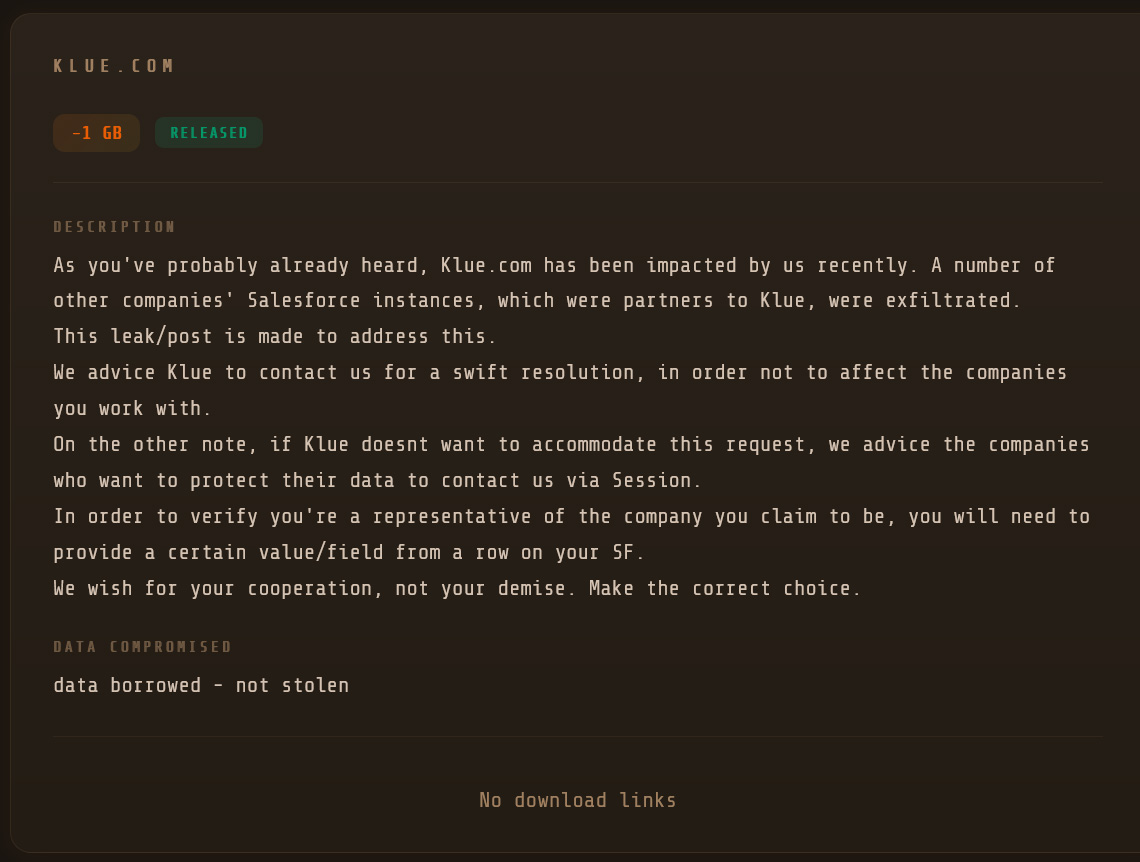
Klue, the competitive intelligence platform many revenue teams quietly depend on, confirmed unauthorized activity discovered on June 12, 2026 that touched part of its integration infrastructure. The entry point was not a sophisticated zero-day or a phished executive. It was a forgotten credential, a dormant secret tied to an abandoned prototype integration that nobody had bothered to revoke. That detail should make every CIO uncomfortable, because almost every enterprise has a graveyard of similar credentials sitting in code and config that no one owns anymore.
Once inside, the attackers did not simply rummage around. They pushed a malicious code update designed to harvest OAuth tokens for Klue's third-party connections. In effect, a vendor used to track competitors became a token vending machine for the attacker. Klue CEO Jason Smith described it plainly: an attacker gained access through a compromised legacy credential associated with an integration service and subsequently accessed data within a number of connected customer environments. That sentence is the entire modern supply chain problem in one breath.
The Victim List Reads Like a Security Industry Roster
What elevates this incident from routine to remarkable is who got hit. The named victims include Klue itself, Recorded Future, Tanium, Jamf, Sprout Social, Gong, Insurity and Huntress. Several of those are security companies, organizations that sell the very capabilities meant to prevent this kind of event. Huntress disclosed that its own Salesforce environment was reached and that the stolen data included business contacts, sales communications, pricing information, and other records.
The irony is instructive rather than gloating. These are mature, well-resourced security teams, and they were still exposed through a downstream SaaS dependency they did not directly control. When the strongest defenders in the market can be compromised through a shared vendor's OAuth tokens, the takeaway for everyone else is sobering. Your security posture is now a function of the weakest integration you have connected to your CRM, and you probably cannot name all of them off the top of your head.
How Tokens Turned Into Bulk Data Theft
The stolen OAuth tokens were not trophies, they were working keys. Attackers reused them against a sprawling list of platforms: Salesforce, HubSpot, SharePoint, Zoom, Gong, Chorus, Clari, Google Drive and Slack. OAuth tokens are designed to grant persistent, scoped access without a password prompt, which is exactly what makes them so valuable once stolen. There is no login event for a defender to flag and no second factor standing in the way.
Against Salesforce specifically, the attackers deployed Python scripts to query the APIs over extended periods, pulling data steadily rather than in one noisy burst. That patience is a hallmark of operators who understand that slow, API-driven exfiltration blends into normal automation traffic. CrowdStrike is assisting with the response, and Salesforce moved to disable the Klue Battlecards integration to cut off the abused pathway. By then, the question for affected customers was no longer whether to revoke tokens but how much had already left.
Icarus and the Extortion Playbook
The threat actor behind the campaign calls itself Icarus and claims it has been active inside this ecosystem since April 28. Beyond the theft, Icarus has turned to extortion, emailing victims under the almost theatrical alias mr bean. The branding may be absurd, but the model is not. Naming a group, claiming a timeline and reaching out directly to victims are all designed to apply pressure and to establish credibility for whatever demands follow.
There is no CVE attached to this event, and that is precisely the point we keep returning to. Traditional vulnerability management assumes there is a flaw to patch. Here, the underlying machinery worked exactly as designed. OAuth granted access, integrations honored tokens, and APIs served data. The abuse lived in trust relationships, not in a buffer overflow, which means the usual patch-and-move-on reflex offers nothing. Executives need a different mental model for risk that lives in configuration and identity rather than code.
Why Integration Marketplaces Are a Systemic Risk
Every major SaaS platform now ships an integration marketplace, and they are sold as productivity, not as risk. Connect Klue to Salesforce, connect Gong to your CRM, wire Slack into everything, and watch the workflows hum. What rarely gets discussed in the procurement meeting is that each connection is a standing grant of access that survives long after anyone remembers approving it. The Klue breach is a clean demonstration of how one compromised node in that web propagates outward to dozens of downstream environments.
For CTOs and CIOs, the strategic implication is that SaaS OAuth token abuse has become the new supply chain frontier, sitting alongside compromised software packages and poisoned build pipelines. The threat is harder to see because it hides inside sanctioned, legitimate connections. Treating integrations as a permanent, unmonitored extension of your trust boundary is no longer defensible when a single dormant credential at a vendor can quietly drain your CRM through its own API.
What Executives Should Do Now
The immediate response is unglamorous but essential: inventory every OAuth grant and integration connected to your core systems, then revoke and rotate aggressively, starting with anything dormant or unowned. The dormant credential that opened Klue should prompt a sweep for the equivalents in your own estate, the prototype integrations and proof-of-concept connections that were never decommissioned. If you cannot produce that list today, you have found your first gap.
Beyond cleanup, the durable fix is governance. Treat OAuth tokens as privileged credentials with owners, expiration and monitoring, and demand visibility into the API activity those tokens generate so that slow, scripted exfiltration cannot hide in the noise. Push your SaaS vendors to explain how they secure the integration infrastructure you are trusting. The brands burned here are sophisticated, which tells us this is not a competence problem. It is a structural one, and structural problems require deliberate policy, not faith in the marketplace.