What DoorDash shipped and why it built it
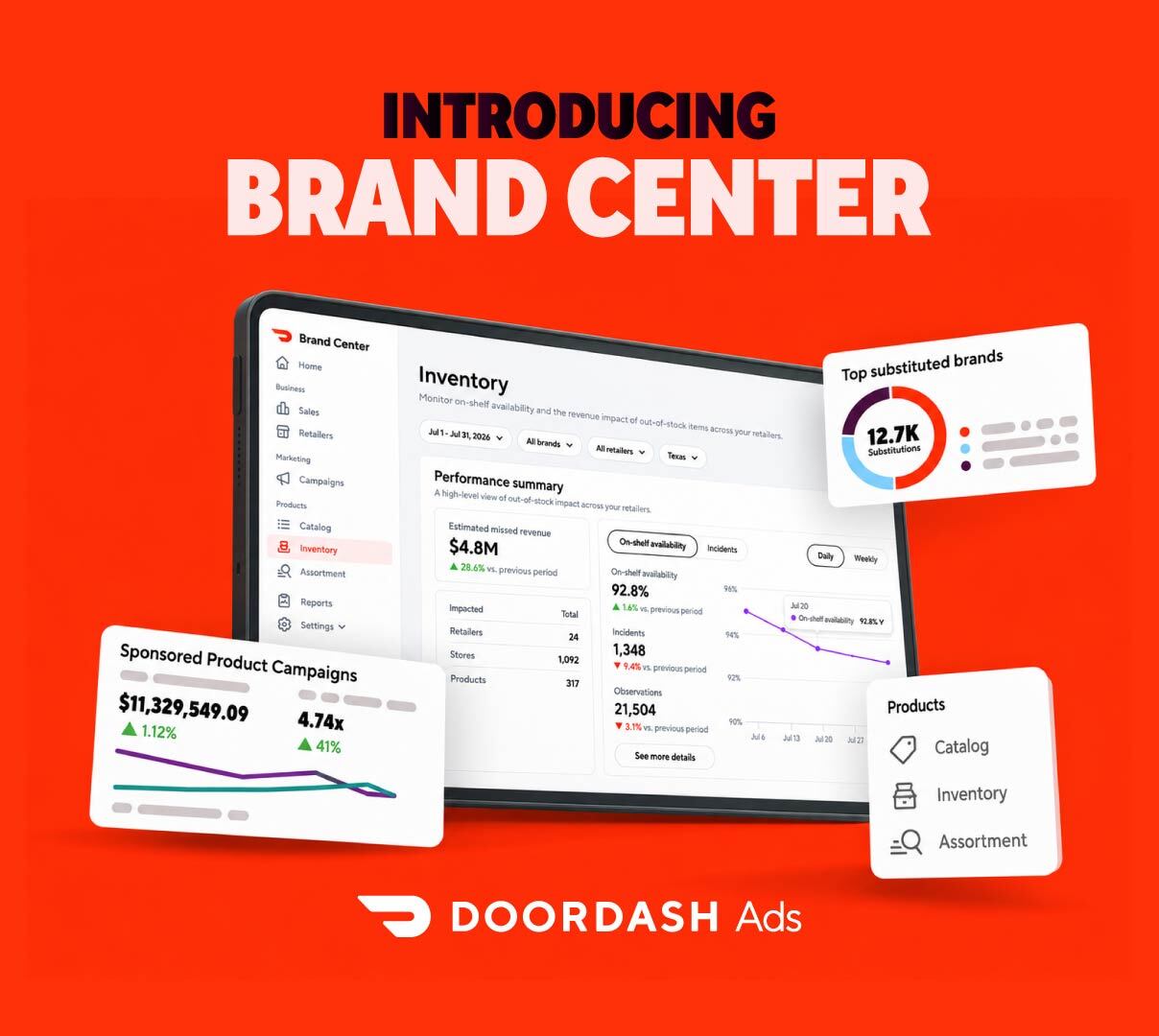
DoorDash introduced Brand Center on September 23, a unified platform aimed at marketing, supply chain, category management, ecommerce, and national account teams at CPG companies. The pitch is visibility: the platform combines consumer purchase data with shelf scanning insights gathered by Dashers as they fulfill orders in physical stores, giving brands a single view of product performance across digital and physical retail that most of them have never had in one place.
Fuad Hannon, DoorDash's VP of New Verticals, said Brand Center is part of the company's broader investment in local commerce, providing brands with insights that help strengthen performance. The scale behind that claim is substantial: more than 9 million Dashers across DoorDash, Deliveroo, and Wolt collectively capture over a million shelf signals a day across more than 200,000 retail and grocery locations, a dataset DoorDash is now productizing rather than treating purely as a delivery logistics byproduct.
The 1.7 trillion dollar problem behind the product
DoorDash frames Brand Center against a specific, large number: inventory distortion, meaning the combined cost of products that are out of stock when shoppers want them and products that sit overstocked and eventually get marked down or wasted, costs the global retail industry an estimated 1.7 trillion dollars annually. That figure has circulated in supply chain research for years, but most CPG brands have lacked a real time, store level view of where it is actually happening to them specifically, as opposed to industry wide estimates.
The consumer behavior data DoorDash is citing sharpens why that gap matters commercially. When a preferred item is unavailable, 12 percent of shoppers pick a competing brand instead, permanently redirecting that purchase and potentially the relationship, while 40 percent request a refund rather than accept any substitute at all, meaning the retailer and the brand both lose the sale outright. Out-of-stocks are not a rounding error in this data. They are a direct, measurable channel for brand switching and lost revenue.
Inside the four core features
Brand Center ships with four core capabilities. Inventory Insights tracks out-of-stocks across the 200,000 plus locations in DoorDash's network, giving brands store level visibility they previously had to request from retail partners or estimate from sell-through data. Consumer Substitution Insights shows what shoppers actually bought instead when a preferred item was missing, turning a blind spot into a pattern brands can act on. Assortment Insights flags missing listings and incomplete product details across stores, a chronic problem in grocery and convenience retail where catalog data quality varies wildly by banner.
The fourth piece, a Catalog Editor, gives brands direct control to fix product information rather than routing change requests through retailer merchandising teams and waiting. DoorDash pairs this with Merchandising Tasks, which connect brands to in-store support for audits, restocking, and display work at eligible locations, closing the loop from diagnosis to physical fix in a way that a pure analytics dashboard cannot. Taken together, the four features move Brand Center past a reporting tool and toward an operations product, one where a brand can see a problem, understand why it happened, and dispatch a fix without leaving the platform or waiting on a retailer's own merchandising cycle.
Competing directly with Instacart and Circana on retail intelligence
Brand Center puts DoorDash squarely into territory Instacart and data providers like Circana have occupied for years: selling CPG brands visibility into retail execution in exchange for a data relationship that also strengthens the platform's advertising business. DoorDash has separately been working with Circana to measure the impact of its own CPG advertising, and Brand Center extends that same data driven pitch from ad measurement into supply chain and merchandising, a broader and stickier product category if it works as described.
The advantage DoorDash is leaning on is one competitors cannot easily replicate: a delivery fleet that is already physically inside stores at high frequency, generating shelf level signal as a byproduct of fulfilling orders rather than through a dedicated audit team or third party data purchase. Whether that signal is representative enough of full store inventory, versus just the subset of shelves Dashers happen to walk past while picking orders, is a methodology question CPG buyers should press DoorDash on before treating Brand Center data as ground truth.
What CPG and retail technology leaders should do with this
For CPG brands already running DoorDash advertising, Brand Center is a natural add-on that bundles retail execution data with a platform relationship that already exists, and it is worth evaluating specifically for the substitution and out-of-stock visibility most brands currently lack at any granularity. For brands with existing investments in Circana, NielsenIQ, or retailer specific analytics, the near term task is reconciling methodologies rather than assuming Brand Center replaces those relationships outright, since DoorDash's own numbers reflect only the subset of stores and shelves its Dashers actually cover, not a retailer's full footprint.
The bigger strategic point for retail and CPG technology leaders is that delivery platforms are becoming data companies whether or not that was the founding thesis. DoorDash, Instacart, and their peers are all sitting on operational exhaust, in this case literal shelf photos and substitution behavior, that turns out to be commercially valuable analytics product. Any vendor evaluation happening in this space now needs a data provenance and methodology question on the checklist, not just a pricing comparison, because the same shelf signal that powers a useful dashboard today is also the training data these platforms will use to build the autonomous replenishment and ordering agents they are all racing toward next.


