Betting on the Boring Layer
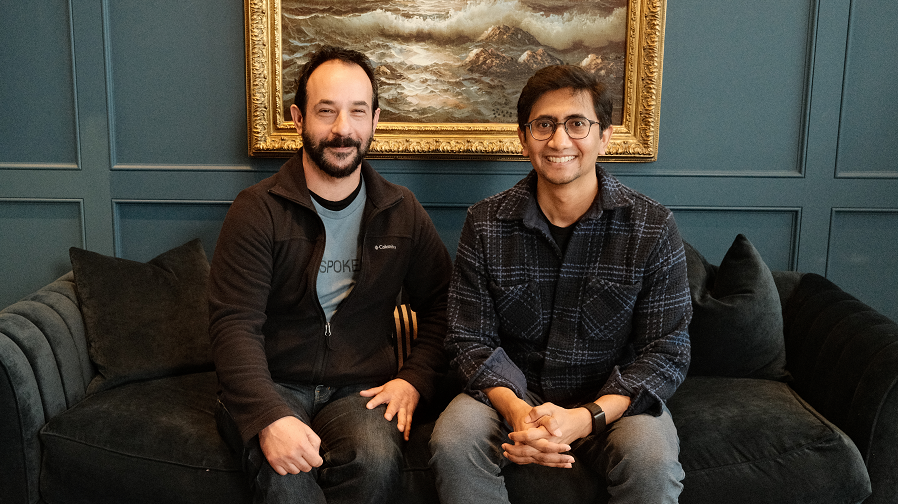
Bespoke Labs announced on July 6 that it has raised 40 million dollars in a Series A led by Wing VC, with participation from Mayfield, The House Fund, dbt Labs chief executive Tristan Handy, and angels drawn from Anthropic, OpenAI, and Meta. Notably, the company is not building another foundation model. It is building the environments in which agents are trained and tested, a layer that sits underneath the models everyone else is racing to scale. In an era obsessed with parameter counts, Bespoke is making a contrarian bet that the constraint is not intelligence but reliability.
The distinction matters. Training a language model to answer questions is, by now, a well-trodden problem. Training an autonomous agent to complete a multi-step, economically meaningful task without going off the rails is a far harder one, because the agent has to act over long horizons in messy systems where mistakes compound. Bespoke's founders argue that the missing ingredient is not a bigger model but a place to practice, and their entire product is a bet that the practice ground is where the value now concentrates.
Simulated Companies as a Product
What Bespoke actually sells is unusual: environments engineered to look and behave like real companies. That means large codebases, live microservices, realistic logs, support tickets, email threads, and Slack channels, all wired together so an agent can learn the long-horizon workflows that businesses actually run on. Instead of grading a model on a static benchmark, Bespoke drops an agent into a synthetic organization and watches whether it can navigate the ambiguity, recover from errors, and finish the job. The environment is the curriculum.
This approach borrows directly from how hard problems in robotics and game-playing were solved, where simulation let systems accumulate experience that would be too slow, costly, or dangerous to gather in the real world. Applying the same idea to enterprise software is a genuinely useful reframing. If an agent can rehearse thousands of variations of a claims-processing or incident-response workflow in a simulated company, it can arrive in a real one already competent. The reinforcement-learning loop that this enables is the core of what the new capital will fund.
A Team With Benchmark Credibility
The founders give the bet real weight. Bespoke Labs was started in 2024 by Mahesh Sathiamoorthy and Alex Dimakis, and the team has already made itself central to how the field measures agents. Bespoke is a core contributor to Terminal-Bench, one of the most widely cited benchmarks for agentic capability, and it is the group behind OpenThoughts, an open reasoning dataset that has been downloaded more than 500,000 times and used by organizations including Thinking Machines Lab, Meta, and Amazon. This is a company that helped define how the industry scores agents now selling the infrastructure to improve them.
That credibility is not incidental to the fundraise. Investors backing infrastructure rather than models are making a judgment that the durable value in agentic AI will accrue to the tooling that makes agents dependable, not only to the labs that make them capable. A team known for building benchmarks and open datasets is unusually well positioned to sell evaluation and training environments, because it already understands, in fine detail, where agents fail and why. The angels from Anthropic, OpenAI, and Meta on the cap table underline how seriously the frontier itself takes the problem.
The Enterprise Reliability Gap
The commercial logic tracks a shift every technology leader is living through. Enterprises spent the last two years deploying AI assistants that suggest and draft, and they are now trying to graduate to agents that act. The gap between those two modes is dependability. An assistant that hallucinates costs a user a few minutes of correction. An agent that misfires while touching production systems, financial records, or customer data can cause real damage. That is why demand is growing for tools that make autonomous systems predictable and easy to evaluate at scale, which is precisely the market Bespoke is targeting.
We see this as the maturing of the agent category. The first wave of enterprise AI was sold on capability and demoed on best-case tasks. The next wave will be bought on reliability and judged on worst-case behavior, because production environments do not grade on a curve. Companies that can prove an agent will behave safely across thousands of realistic scenarios will win enterprise trust, and the infrastructure to generate and score those scenarios becomes strategically valuable. Bespoke is selling exactly that assurance layer.
A Crowded but Immature Field
Bespoke is not alone in chasing the reliability layer, and that is part of what makes the round notable. A growing cluster of startups is building agent-evaluation harnesses, synthetic-data pipelines, and sandboxed environments, and the big labs are investing in their own internal versions of the same tooling. The field is crowded but immature, with no settled standard for how an agent should be graded before it reaches production. That absence of a standard is precisely the opportunity, and a team that helped author widely used benchmarks has a credible claim to help set one.
The risk, of course, is that the frontier labs decide this capability is too strategic to outsource and build it entirely in house, squeezing independents out. Bespoke's counter is that realistic environments are hard to build well and benefit from a neutral vendor serving many customers, much as testing and observability tools thrived as independents even inside software organizations that could have built their own. Which model wins is genuinely unsettled, and it is one of the more interesting open questions in the plumbing of enterprise AI.
Where the Money Signals the Market
The round is small next to the headline-grabbing raises of the foundation-model labs, but its direction is what matters. Capital is beginning to flow toward the unglamorous infrastructure surrounding AI, the evaluation harnesses, synthetic-data generators, and reinforcement-learning environments that determine whether all that model capability can be trusted in production. Bespoke plans to use the funds to expand its research team, scale its environment-building infrastructure, and accelerate commercial momentum, a roadmap aimed squarely at enterprises that have run out of patience with unreliable pilots.
For CIOs weighing agentic deployments, the emergence of a dedicated training-and-evaluation layer is a welcome signal. It suggests the market is starting to treat reliability as a first-class engineering discipline rather than a marketing claim, and that buyers will soon be able to demand evidence of tested behavior before they hand an agent the keys. Our view is that this layer will prove as essential to enterprise AI as testing and observability became to software. Bespoke Labs is early, and on July 6 it got 40 million reasons to build faster.