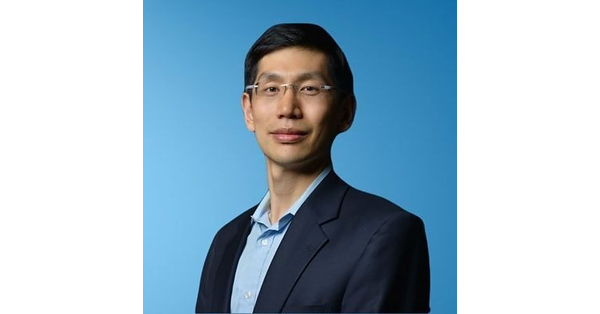
A medtech giant shops outside its own ranks
BD, the medical technology company behind syringes, infusion pumps and diagnostics used across most of the world's hospitals, just handed its technology function to an outsider. Arthur Hu becomes executive vice president and chief information and digital officer effective September 30, arriving from Lenovo rather than from inside BD's own IT organization. For a company with more than 60,000 employees and four distinct business segments, that choice was deliberate: BD chairman, CEO and president Tom Polen called Hu "an exceptional technology and transformation leader with a proven track record of using digital, AI and automation to drive performance at scale."
The move matters because BD did not need a caretaker. It needed someone who had already modernized a technology-sector enterprise and could translate that experience into healthcare, where clinical risk and regulatory scrutiny make transformation slower and more expensive than in consumer hardware. Polen was explicit that the hire is about more than running infrastructure: Hu, he said, will play a critical role in "building a faster, more productive and more connected BD, modernizing our enterprise, embedding AI into how we work, and translating technology into greater innovation and stronger business outcomes." That is a mandate for a change agent, not a steady-state operator.
The McKinsey-to-Lenovo pipeline that built this hire
Hu's resume reads like a template for the AI-era CIO job. He spent more than a decade at McKinsey & Company advising organizations on technology, operations, strategy and organizational transformation, the kind of generalist consulting background that teaches someone how to sequence a multi-year change program before touching a single system. He then moved into Lenovo, where he rose to senior vice president, global chief information officer and chief technology and delivery officer for the Solutions and Services Group. That combination, strategy consulting followed by running technology inside a hardware and services company, gave him both the framework and the operating scars BD's board apparently wanted.
At Lenovo, Hu's responsibilities included leading digital technology, AI adoption and business transformation across customer, partner and employee-facing platforms, according to BD's announcement. That is a broader brief than a traditional CIO carries, and it foreshadows how BD has defined the role he is stepping into. Twenty-five years of combined consulting and operating experience is also a signal about what boards now expect from this seat: less keeping the lights on, more redesigning how the company runs, with AI treated as the mechanism rather than a side project bolted onto the existing IT roadmap.
What chief information and digital officer actually means here
BD did not simply rename its CIO title for optics. The company described Hu's job as spanning three things at once: modernizing the enterprise, embedding AI into how BD works, and translating technology into innovation and business outcomes across medical essentials, connected care, biopharma systems and interventional, BD's four operating segments. Folding digital officer into the CIO title is BD's way of saying it wants one accountable owner for both the plumbing and the product roadmap for how AI touches clinical and commercial operations, rather than splitting that work across two executives who rarely coordinate well.
That consolidation carries real operational weight for a company BD's size. BD delivers billions of products annually and works directly with hospitals, clinicians and biopharma manufacturers, which means any AI or automation initiative Hu launches has to clear regulatory, safety and data governance bars that a hardware company like Lenovo never had to worry about. The title tells you BD wants a single accountable executive for that tradeoff, someone who ships infrastructure and AI pilots that are built to survive contact with a regulated production environment, not pilots nobody has to maintain.
The succession clock Hu is now running against
Hu is not walking into a vacuum. He succeeds Denise Russell Fleming, who will retire from BD at the end of 2026, which gives him roughly a quarter of overlap before the handoff is final. That is a tight runway for someone coming from outside the company to learn BD's systems, vendor relationships and internal politics before he is fully accountable for them. It also means the first concrete decisions of his tenure, which platforms to consolidate, which AI pilots to fund, which legacy systems to finally retire, will likely be made before he has a full year of institutional context.
For CIOs and CTOs watching this from the outside, the lesson is less about BD specifically and more about how boards are now sequencing these transitions. A short overlap window with a well-regarded predecessor signals confidence that the new hire's outside experience outweighs the ramp-up cost. It is a bet that an executive who has already run technology transformation elsewhere needs less hand-holding than an internal candidate would, even one who already knows BD's systems. Whether that bet pays off will show up within two or three quarters, not years.
Why healthcare keeps recruiting from hardware and PC makers
Hu's move is part of a broader pattern worth tracking: healthcare and medtech companies are increasingly recruiting their top technology executives from consumer hardware, cloud and PC companies rather than from inside healthcare IT. Lenovo in particular has become a feeder system for enterprise CIO roles, because running global IT and AI adoption across a company that ships hundreds of millions of devices a year builds operational muscle that healthcare technology organizations, often insulated by slower regulatory cycles, rarely develop internally. BD's choice to go outside medtech entirely fits that pattern precisely.
The implication for healthcare and medtech leaders reading this is uncomfortable but useful: a technology organization that has spent recent years optimizing mainly for compliance and uptime, rather than for AI-driven transformation speed, is not building the bench strength a board will want for its next CIO search. BD just told the market it would rather import that speed from outside the industry than wait for it to develop internally. Expect more medtech, pharma and payer organizations to make the same calculation over the next 12 to 18 months.
What this means for your roadmap
If you run technology at a regulated enterprise, BD's hire is a useful external benchmark for how your board is likely to evaluate your own CIO succession plan. The title alone, chief information and digital officer, is becoming shorthand for boards that want one accountable executive for infrastructure and AI transformation rather than a divided mandate. If your organization still separates those functions, this is the moment to make the case internally for consolidating them, before your board decides to do it for you by hiring someone like Hu from outside.
The other signal worth acting on is the consulting-to-operator pipeline itself. Boards are rewarding executives who can show both strategic framing experience and multi-year operating scars, not one or the other. If you are building your own succession bench, that argues for rotating high-potential technology leaders through strategy and transformation assignments before handing them a CIO title, rather than promoting the best infrastructure operator by default. BD just paid a premium for exactly that combination, and its peers are watching.