A UK First With Global Implications
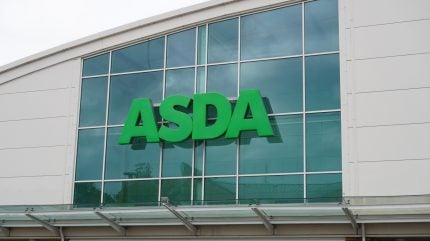
Asda has become the first retailer outside the United States to adopt Amazon Retail Ad Service, licensing Amazon's advertising technology to power sponsored product ads across its business. The distinction that matters here is subtle but important: Asda is not buying ads on Amazon. It is licensing Amazon's ad stack to run on its own properties. That means Asda keeps its first-party customer relationships and shopper data while renting the machinery that Amazon spent years perfecting. For a UK grocer competing in a crowded market, it is a way to stand up a sophisticated retail media capability without building the underlying ad server, auction logic and measurement infrastructure from scratch.
The move lands at a moment when retail media has become one of the most profitable growth levers in the industry, and when every major grocer is under pressure to monetize its digital shelf. By choosing to license rather than build, Asda is making a clear judgment about where its advantage lies. It is betting that its scale, its shopper relationships and its George fashion and home business are the assets worth protecting, and that the ad technology itself is better bought from the company that operates the largest retail media network on earth. We think that calculation will resonate with a lot of retailers watching from the sidelines.
What The Stack Actually Does
The licensed technology will power sponsored product ads across Asda's online grocery channel and its George fashion and home range, using machine learning trained on real shopping behaviour and purchase intent. That is the crux of the value. Sponsored product placements only pay off when they are relevant, and relevance depends on models that understand what a shopper is actually trying to buy in the moment. Amazon's systems have been optimized against exactly that signal at enormous scale, and Asda is now applying them to its own catalog. For the brands advertising on Asda, that should translate into placements that convert better because they are matched to genuine intent rather than blunt demographic targeting.
Asda promises the deal will bring improved campaign measurement, richer audience insights and streamlined planning and execution. Those are not cosmetic benefits. Weak measurement has long been the Achilles heel of retail media outside the largest platforms, leaving advertisers unable to prove return on spend and therefore reluctant to commit budget. If Amazon's measurement rigor travels with the ad stack, Asda can offer brands the closed-loop reporting they already expect from Amazon itself. That credibility gap is often what separates a retail media network that scales from one that stalls, and closing it is arguably the most valuable thing Asda is buying here.
One Framework Across Two Retailers
Perhaps the most consequential detail is that brands will be able to manage campaigns through a single advertising framework spanning both Asda and Amazon Ads inventory. For advertisers, fragmentation is a tax. Every additional retail media network means another interface, another set of specifications, another reporting format and another team to train. Collapsing Asda and Amazon into one operational framework meaningfully lowers that friction, which should make Asda's inventory easier to buy and therefore more competitive for advertiser dollars. It is a structural advantage that a retailer building its own bespoke system simply cannot offer, because it starts from a standard the market already knows.
Amazon's Joseph Park, VP Creative Experiences and AI Solutions at Amazon Ads, framed the shopper benefit directly: "This partnership is the first of its kind in the UK and will make it easier for advertisers to reach Asda and George shoppers at key moments in their purchase journey." The phrase key moments is doing real work. Reaching a shopper at the point of intent, rather than interrupting them earlier, is what makes sponsored products effective, and a shared framework makes it easier for brands to orchestrate that timing across both retailers. For Amazon, licensing its stack to third parties is a new distribution model that extends its reach well beyond its own marketplace.
The Strategic Read For Retail Leaders
Rachel Eyre, Chief Customer and Digital Officer at Asda, summed up the appeal in terms that reveal the strategy: "Amazon's Retail Ad Service gives UK advertisers the signals, measurement and scale they need, in a way that is seamless and familiar from day one." Seamless and familiar from day one is precisely why licensing can beat building. A homegrown network has to earn advertiser trust and rebuild habits from zero, while a licensed stack inherits an established standard. The rollout is phased beginning in the fourth quarter of 2026, which suggests Asda intends to prove the model methodically rather than flip a switch across every category at once.
For retail and CPG technology leaders, the lesson extends well beyond one grocer. This deal reframes the build-versus-buy question that every retailer with a media ambition now faces. The prevailing assumption has been that owning the full stack is the only way to capture retail media margin, but Asda is demonstrating a middle path: license proven technology, keep the customer relationship and the data, and compete on the assets you actually control. If the Q4 rollout delivers, we expect a wave of retailers outside the US to weigh the same trade, and Amazon to position its ad service as infrastructure for the entire industry rather than a walled garden.
The Agentic Commerce Angle
There is a longer horizon question this deal raises for anyone tracking agentic commerce. As AI assistants begin to browse and buy on shoppers' behalf, the retailers with the cleanest, best-instrumented ad and product data will be the ones whose inventory agents can actually surface and transact against. Licensing a mature stack that already runs on machine learning trained on real purchase intent gives Asda a head start on that legibility. The same signals that power sponsored products today are the raw material an agent will need to understand what Asda and George sell and why a given item fits a shopper's request, which makes this less a one-off media play than a data foundation.
We would encourage retail leaders to view retail media infrastructure and agentic readiness as two sides of the same investment rather than separate roadmaps. A brand that gets its measurement, audience insights and structured product data in order for advertising is simultaneously preparing itself for a world where machines mediate discovery. Asda's decision to adopt Amazon's standard rather than invent its own also hints at where interoperability may head, because a shared framework is easier for external agents to integrate with than a bespoke one. If agents ultimately shop across many retailers, the ones speaking a common, well-understood language will be the easiest for those agents to recommend and buy from.