A CEO stakes her IPO pitch on a contrarian AI claim
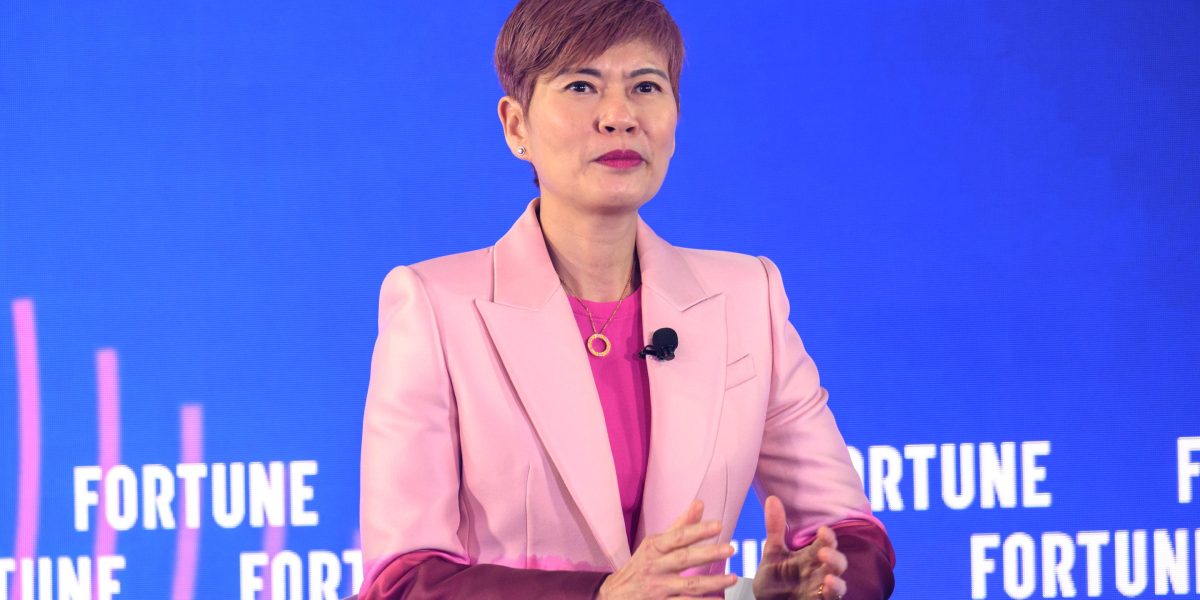
Malina Ngai runs AS Watson, the world's largest health and beauty retailer by store count, with more than 17,000 outlets across 31 markets and roots that trace back to a Hong Kong pharmacy founded in 1841. Speaking at the Fortune Leaders Forum in Macau on September 8, she made a claim that cuts against the dominant retail AI narrative of the last two years: retail is going to become more human, not less, because of AI, not despite it. The company is reportedly heading toward an IPO valued near 30 billion dollars, which means every public statement Ngai makes about AI now doubles as investor messaging.
That context matters. Most retail AI announcements this year have paired new tooling with quiet workforce reductions, and boards have learned to read between the lines. Ngai is doing the opposite: she is putting a specific, falsifiable claim on the record before the roadshow starts. If AS Watson's AI program is really about engagement and productivity rather than a euphemism for layoffs, the company has chosen a hard story to walk back later. That is either confidence or a very calculated bet, and it is worth taking seriously either way.
The pitch: bring the assistant to work, do not replace the worker
Ngai's framing is specific. "You should bring the AI assistant with you to work," she said. "It helps you to think faster and smarter." That is a deliberately different instruction than the one most enterprises give employees, which is closer to "here is a tool, use it to do the same job with fewer people." AS Watson says it began implementing this human-AI partnership approach in October, and that since then employee engagement scores have risen significantly, alongside improved customer satisfaction metrics tied to staff spending more time on face-to-face interaction rather than administrative tasks.
We would normally treat self-reported engagement and satisfaction gains from a company mid-IPO-prep with real skepticism, and readers should too. But the mechanism Ngai describes is plausible and testable: if AI absorbs the low-value administrative load, staff time shifts toward the customer-facing work that actually drives loyalty in health and beauty retail, where advice and trust matter more than in commodity categories. The claim is not that AI made people more productive at the same job. It is that AI changed what the job is.
The Foshan warehouse is the harder evidence
The strongest data point Ngai offered is not a survey score. It is a workforce composition shift at AS Watson's Foshan warehouse, where automation replaced heavy manual lifting with robotics. Female employees at that facility went from 20 percent of the workforce to 62 percent as the physical strength requirement that had implicitly gated the job disappeared. That is a concrete, observable outcome of an automation deployment, not a sentiment metric, and it is the kind of result that survives scrutiny in a way that engagement scores do not.
For CTOs and COOs running warehouse or fulfillment operations, this is the more useful data point in the whole story. Automation investment cases are usually built on throughput and cost per unit. Labor market access is rarely modeled, but it changes hiring pools, wage dynamics, and retention in ways that show up on the P&L eventually. If your automation business case only counts units per hour, you are almost certainly undercounting the actual return.
The warning CTOs should actually take from this
Ngai's sharpest line was a caution, not a celebration. She warned against deploying AI merely to speed up existing workflows, saying plainly that doing so just gets you "a version of yesterday." That is a direct challenge to how most enterprise AI programs are actually scoped: find the slowest manual process, bolt AI onto it, ship a productivity metric. It works, technically. It also locks in whatever inefficiency was already baked into the process, just faster.
The alternative Ngai is describing requires redesigning the process itself around what AI makes newly possible, not automating the existing one. That is a much harder program to run, because it requires product and operations leaders to question workflows that predate the technology entirely, rather than just wrapping them in a chatbot. Most enterprises do not have the organizational appetite for that right now. AS Watson is betting its IPO narrative that it does.
Why this is really an investor communication problem
Every public company heading toward a listing has to decide how it talks about AI to two audiences at once: employees who need to trust the transition, and investors who need to believe the technology is driving durable margin improvement. Those two messages are often in tension, because the investor-friendly version of an AI story usually implies fewer people doing more work, while the employee-friendly version implies augmentation without displacement. Ngai is trying to run one message that works for both, which is unusual and worth watching.
It will be tested during the roadshow. Analysts will ask directly whether AS Watson's AI investment shows up as margin expansion, and if the honest answer involves productivity gains that come from smarter staff deployment rather than headcount reduction, that is a slower, less dramatic story to sell than a straightforward cost-cutting narrative. Whether public market investors reward the patient version of that story, or discount it relative to peers who are cutting harder and faster, will say a lot about where retail AI sentiment actually sits heading into 2027.
What this means for your own AI roadmap
Few CTOs run a 17,000-store retailer, but the underlying decision Ngai is describing shows up in every enterprise AI rollout: do you scope automation projects around headcount reduction targets, or around redesigning the work itself, with headcount as a downstream consequence rather than the starting metric. The first approach is easier to fund and easier to explain to a board. The second is harder to plan but appears to produce better second-order outcomes, based on the limited evidence AS Watson has offered so far.
The Foshan data point is the one worth stealing for your own board deck. If you are running automation in physical operations, warehouse, fulfillment, manufacturing, look at what happens to your labor pool composition and retention, not just your unit economics. That number told a more convincing story than any engagement survey could, and it is the kind of evidence that will matter more than marketing language once AS Watson's AI claims face public market scrutiny.