Amazon moves against the hiring trend
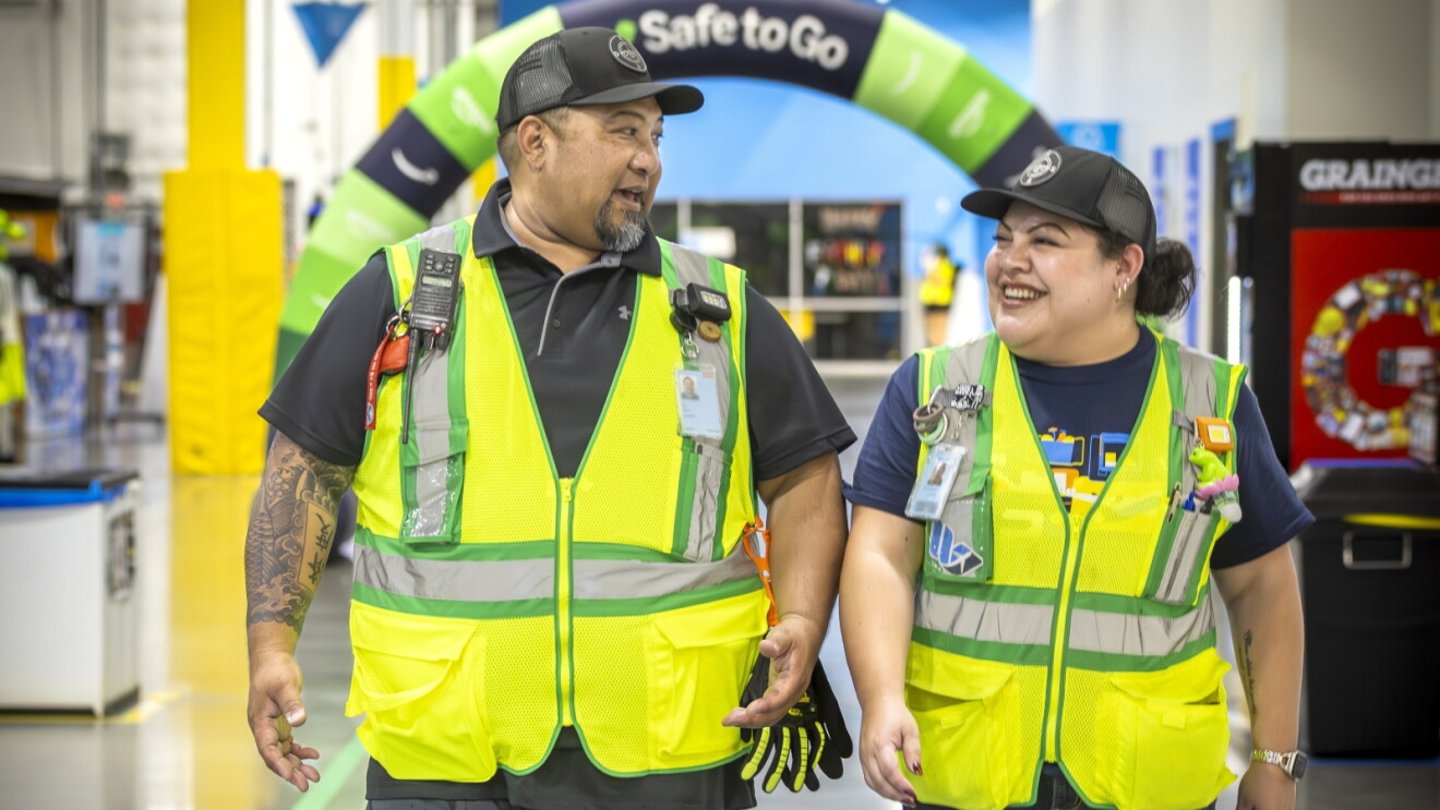
Amazon said it plans to hire more than 300,000 people for seasonal, part-time, and full-time roles across its U.S. core operations network this holiday season, according to Chain Store Age. That figure is a 20 percent increase over the roughly 250,000 seasonal hires Amazon made in each of the 2023, 2024, and 2025 holiday periods, and the company describes it as the most seasonal workers it has ever hired. Seasonal pay will average $20 an hour, with a stated path for workers to move into full-time roles, and new seasonal job postings will go up weekly through December.
That hiring increase is notable mainly because of what everyone else in retail is doing. Outplacement firm Challenger, Gray and Christmas forecasts that total U.S. seasonal retail hiring will fall to 450,000 jobs in the fourth quarter, a figure below last year's total. Dick's Sporting Goods expects about 8,400 seasonal hires, down roughly 40 percent from about 14,000 in 2025, and its Foot Locker division expects about 2,900 seasonal hires, also down roughly 40 percent. Michaels is holding steady with more than 10,000 planned seasonal hires, flat with last year. Amazon is scaling up while much of the rest of the sector scales down.
Healthcare as a retention tool, not just a perk
The hiring number is paired with a benefits change that matters more structurally. Starting January 1, 2027, Amazon will offer health benefits to seasonal employees who work at least 30 hours a week, a policy that covers this year's holiday hires as well as future seasonal workers. Employees hired before January 1 get coverage starting that date, while those hired on or after January 1 get coverage from their first day. Plan options start at $5 a week with $5 copays, a low enough price point that it functions as a genuine benefit rather than a nominal offering.
Extending healthcare to seasonal workers is a direct response to one of retail's most persistent operational problems: seasonal attrition and no-show rates that force managers to over-hire just to hit coverage targets. A benefit like this is a retention lever dressed up as an employee benefit announcement, and it signals that Amazon is treating seasonal labor supply as a competitive constraint worth paying to solve, at a moment when the broader seasonal labor pool is shrinking in demand from other retailers.
What the divergence reveals about strategy
The gap between Amazon's hiring increase and the broader market's pullback is too large to be coincidental. Dick's Sporting Goods and Foot Locker cutting seasonal headcount by roughly 40 percent in a single year suggests either a deliberate shift toward automation and reduced staffing models, softer sales expectations, or both. Amazon's simultaneous 20 percent increase suggests the opposite bet: that fulfillment capacity and speed during peak season remain a competitive differentiator worth over-staffing for, even as fewer specialty retailers are willing to carry that labor cost.
Notably, nothing in Amazon's own announcement framed the hiring increase around AI or automation investment. The only automation reference in the announcement was the automated job alert system available to prospective applicants, not any claim that robotics or AI are reducing the need for seasonal labor. That absence is itself informative: Amazon is not publicly presenting this holiday season as an automation story, even though the company has invested heavily in warehouse robotics in other contexts. The headcount increase suggests that even with automation investment underway, Amazon still sees human seasonal labor as the binding constraint on holiday fulfillment capacity.
The decision every retail operator is making right now
Every retail CTO and COO heading into this holiday season is implicitly choosing a position on the same spectrum Amazon and Dick's Sporting Goods have now staked out opposite ends of: fund capacity through people, or fund it through automation and leaner staffing and accept more variability in service levels during demand spikes. There is no universally correct answer, since it depends on fulfillment model, margin structure, and how exposed a given retailer's demand is to unpredictable spikes versus a more stable, forecastable pattern.
What is useful here is that this divergence is happening in the same quarter and will produce comparable real-world outcomes. Watching which approach, Amazon's headcount surge or Dick's Sporting Goods' leaner model, produces better holiday fulfillment metrics and customer satisfaction scores will give the rest of the industry a genuine natural experiment to learn from, rather than a vendor-supplied case study. Retailers still finalizing Q4 staffing plans have a narrow window left to course-correct based on how this plays out in November.
The roadmap implication
For CTOs specifically, the lesson is to treat seasonal workforce planning as a technology and operations decision, not purely an HR line item. The systems that support rapid seasonal onboarding, from automated job alert pipelines to benefits enrollment to shift scheduling, are infrastructure, and Amazon's ability to scale seasonal hiring by 20 percent in a single year while extending new benefits reflects operational systems mature enough to absorb that scale without breaking.
Any retailer planning to lean more heavily on automation this holiday season should be honest in its own planning about whether that automation is actually ready to absorb the demand variability that bracketing, social-media-driven buying spikes, and returns volume create, rather than assuming headcount reductions and automation investment are automatically a wash. Amazon's bet suggests that even a company with some of the deepest automation investment in the industry is not yet willing to make that trade for its busiest season.