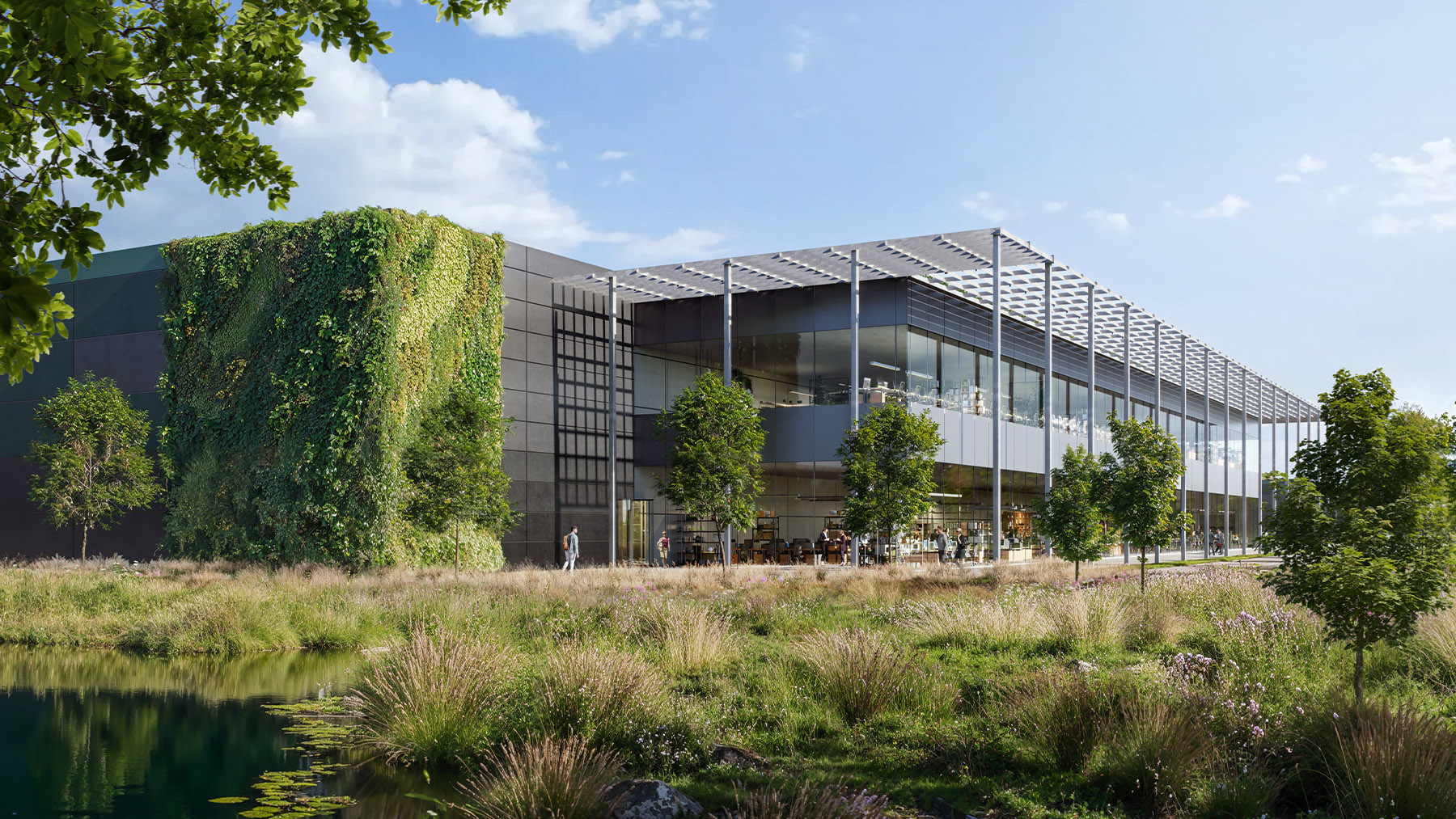
The AI infrastructure boom has a geography problem, and it is solving it by moving inland. In the space of a few days, Amazon and Google committed a combined 25 billion dollars to neighboring data-center campuses in a single Missouri county, Microsoft broke ground in Indiana, and a multibillion-dollar campus won approval in the English countryside. The specific projects matter less than the pattern they reveal: the buildout that will house the next generation of AI is spilling out of the coastal hubs and into whatever regions can supply land, power, and a willing local grid.
Twenty-Five Billion Dollars in One County
The headline numbers are staggering even by the standards of this cycle. Amazon is investing 10 billion dollars in a new data-center campus in Montgomery County, Missouri, while Google is putting 15 billion dollars into a separate project in the same county. That two hyperscalers are each committing sums that would have been landmark national infrastructure programs a decade ago, in the same rural jurisdiction, at the same moment, captures the sheer velocity of AI-driven capital deployment. The map of American compute is being redrawn in real time.
The choice of location is the strategic tell. Montgomery County is not a legacy technology hub. It is exactly the kind of interior region the hyperscalers are turning to as the traditional data-center corridors run short of the two things these facilities consume most: available land and, above all, available electricity. When two of the largest technology companies on earth independently converge on the same rural county, they are following the power and the permits, not an existing cluster of talent or fiber. The infrastructure is going where the constraints allow, and dragging the industry's center of gravity with it.
The Constraint Is Power, Not Capital
It has become a truism of this cycle, but it bears repeating because it explains everything else: the binding constraint on AI infrastructure is no longer money or even chips. It is electricity. The hyperscalers have effectively unlimited capital and long-dated GPU commitments. What they cannot conjure is gigawatts of reliable power delivered to a specific patch of ground on a workable timeline. That single reality is why the geography of the buildout is shifting toward regions with spare grid capacity, cooperative utilities, and room to add generation.
This reframes what these announcements actually are. A 15 billion dollar campus is as much an energy project as a computing one, and its viability hinges on grid interconnection, generation capacity, and the local utility's appetite for a customer that may consume as much power as a mid-sized city. The regions that win the next wave of investment will be those that can credibly promise power at scale. For state and local officials, that turns AI infrastructure into an economic-development prize contingent on energy policy, and it turns the humble question of grid capacity into a determinant of where the digital economy grows.
Communities Weigh the Bargain
For the counties involved, projects of this magnitude are a genuine double-edged bargain, and it is worth being honest about both edges. The upside is real: substantial tax revenue, construction employment, and the prestige of hosting the infrastructure of the AI age. Microsoft's Indiana groundbreaking, paired with a data-center academy at Ivy Tech Community College, points to the more constructive version of the deal, one that tries to build durable local skills and career pathways rather than simply parking servers in a field.
The downside is equally concrete. Modern hyperscale data centers are enormous consumers of power and, frequently, water, and they employ relatively few people once construction ends. Communities that grant large tax incentives can find themselves subsidizing facilities that strain local resources while delivering fewer permanent jobs than a traditional factory of comparable investment. The academy model matters precisely because it attempts to convert a capital-intensive, labor-light installation into lasting human capital. Whether that becomes the norm or the exception will shape how these bargains are judged a decade from now.
A Global Race With Local Politics
The pattern is not confined to the American heartland. In the United Kingdom, a 5.3 billion dollar AI-ready data-center campus in Hertfordshire recently won approval from the local council, clearing the political hurdle that increasingly determines whether these projects proceed. Across markets, the story is converging on the same friction point. The capital is available and the demand is proven. What is scarce is local consent and local grid capacity, and both are decided in council chambers and utility boardrooms, not in Silicon Valley.
That makes the current phase of the AI boom unusually dependent on regional politics. A data center is a physical installation that sits in someone's community, draws on someone's grid, and requires someone's planning approval. The competition among regions to attract this investment, and the counter-pressure from residents worried about power prices and resource strain, will shape the map of AI infrastructure as much as any technical consideration. The buildout is global in ambition but stubbornly local in execution, and the local layer is where its limits are being set.
What It Means for Enterprise Technology Leaders
For CIOs, the buildout is easy to treat as distant hyperscaler theater, but it has direct consequences for enterprise strategy. This capacity is being built to serve AI workloads at a scale that assumes enterprises will consume vastly more compute in the years ahead. That is a supply-side vote of confidence in sustained demand, and it should inform how leaders plan for their own AI cost curves. Capacity is coming, but so is competition for it, and the power constraints shaping these sites will eventually shape pricing and availability downstream.
There is also a resilience and sovereignty dimension worth tracking. As compute concentrates in specific regions chosen for their power profiles, questions of geographic redundancy, data residency, and exposure to regional energy or political shocks become more pressing. Enterprises with strict latency, compliance, or continuity requirements should pay attention to where their providers are actually building, because the physical geography of the cloud is becoming less abstract, not more. The heartland buildout is a reminder that even the cloud, in the end, has to live somewhere with enough electricity to run it.