A maturity divide hiding inside the averages
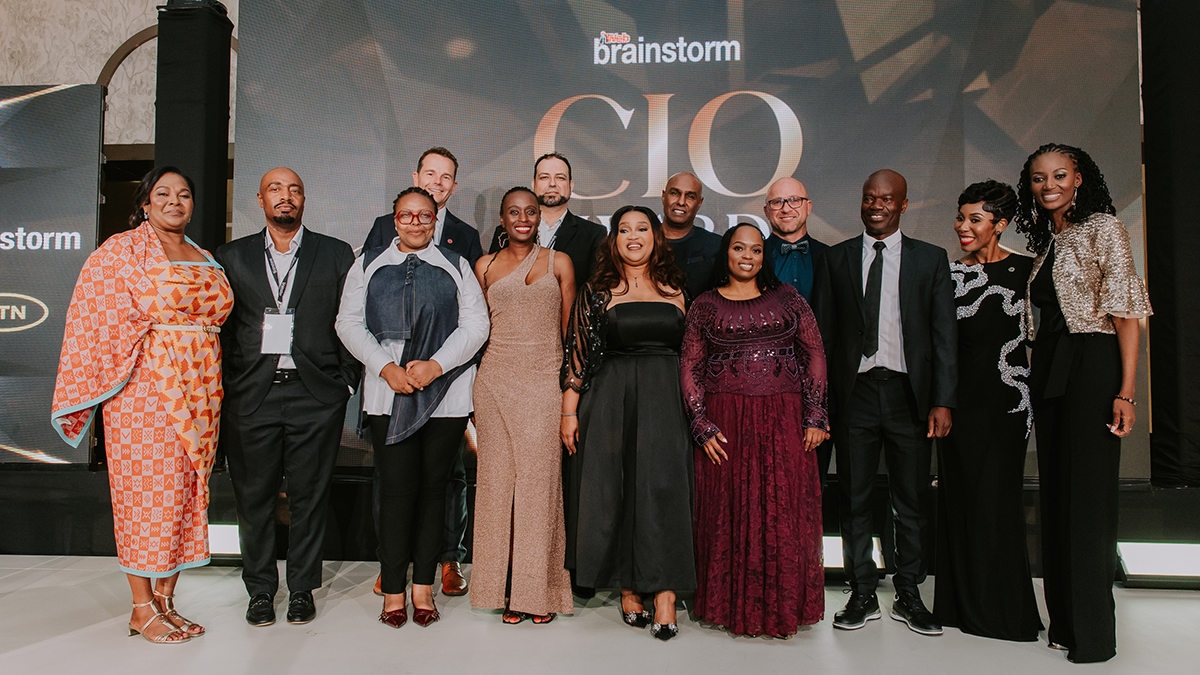
We have read enough CIO surveys this year to be numb to the headline numbers, but ITWeb's 2026 CIO Survey, built from 108 valid responses gathered between mid September and mid October and presented at the ITWeb Brainstorm CIO Banquet in Johannesburg, earns attention for something most of its peers skip: it segments respondents by their own stated maturity, not just by industry or size. Respondents split themselves into technology leaders (36 percent), followers (47 percent), and late adopters (17 percent), and the gaps between those three groups are where the real story sits.
Ten percent of self-described leaders have widely deployed agentic AI. None of the followers or late adopters have. Leaders rated their ability to demonstrate technology ROI at 7.9 out of 10, late adopters at 5.3. That 2.6 point spread, on a survey where the overall average sits at 6.9, tells us the industry average is masking a split that will only widen as leaders compound their advantage and everyone else keeps paying for pilots that never graduate.
Operationalizing AI, not building it, is now the top pressure
Twenty six percent of respondents named operationalizing AI as their biggest single pressure, ahead of budget constraints and talent. That ranking is the clearest signal yet that the bottleneck has moved downstream from procurement and model selection to the unglamorous work of embedding AI into existing workflows, change management, and governance. ITWeb editor in chief Adrian Hinchcliffe, who presented the findings, said the core difficulty organizations face is "defining a clear business case and proving the value," and that this holds true regardless of an organization's digital maturity.
Sixty seven percent of respondents cited budget limits as a major obstacle and 59 percent pointed to change management and culture, both now ranking above pure technical skill shortages. For a CIO audience that spent the last two AI cycles hearing talent scarcity cited as the top blocker, this is a meaningful reordering. It suggests the constraint has shifted from hiring the right people to getting the organization itself to absorb and trust what those people build.
Spending keeps climbing while deployment stays shallow
AI and cyber security are now tied as the top strategic priority, each cited by 67 percent of respondents, up from 57 percent and 63 percent respectively the year before. AI was also the top investment priority outright at 60 percent, ahead of cyber security at 45 percent. Technology leaders raised their AI spending by 26 percent year over year, more than double the 12 percent increase among late adopters, which means the spending gap between maturity tiers is widening even as the deployment gap does the same.
Yet deployment numbers remain modest relative to that spending. Fifty one percent have traditional AI in production and 49 percent have generative AI live, but only 37 percent report any agentic AI in use, and just 4 percent describe that use as widely deployed. The concerns holding agentic AI back are concrete rather than vague: 19 percent cite an unclear business case, 18 percent cite ethical and compliance risk, and 16 percent cite security vulnerabilities as their top concern.
Budgets are rising, but confidence in the size of the rise is falling
Sixty one percent of CIOs said IT budgets rose over the past year, mostly through inflation driven increases rather than discretionary growth, and 63 percent expect further increases next year. But optimism about the magnitude of that growth has softened compared to the prior survey, a combination that should read as a warning sign to any vendor pitching a big expansion year. Average cyber security spending alone rose 23 percent, which tells us a meaningful share of the headline budget increase is defensive rather than transformative.
Cyber security also earned the highest performance rating in the survey at 7.4 out of 10, the one category where CIOs feel confident they are getting what they pay for. That contrast, rising confidence in security spend against flat confidence in AI's returns, is the honest version of where enterprise technology budgets actually sit heading into 2027: protective spending that is easy to justify, and transformative spending that is much harder to defend in a budget review.
What this means for the next budget cycle
Hiring data in the survey reinforces the operational read. Sixty five of 108 respondents said they are actively hiring for AI skills, more than for any other category, with cyber security a close second. That hiring pattern points at a workforce being built specifically to close the gap between what AI can do in a demo and what it can do reliably inside a live production environment, which is exactly the gap this survey's own numbers describe. Organizations are not staffing up to experiment further, they are staffing up to operationalize what they already know works.
For a CIO running technology at an enterprise that looks more like ITWeb's followers or late adopters than its leaders, the highest leverage move is fixing the two things the leaders clearly got right first: a defensible, quantified business case for each AI deployment, and the change management muscle to get the organization to actually use what gets built. Spend without that foundation produces a widening maturity gap instead of a closing one, and chasing an agentic AI pilot before either foundation exists just adds another project to the pile of initiatives this survey shows most CIOs already struggle to justify.
What the Johannesburg panel added to the numbers
The fireside panel that closed out the Johannesburg banquet, featuring technology leaders from Coca-Cola Beverages Africa, the State Information Technology Agency, Sasol, and MTN South Africa, returned again and again to the same point: the organizations pulling ahead treated AI governance and business case discipline as prerequisites rather than afterthoughts. That is a harder message to sell internally than a bold AI roadmap, but it is the one this year's data actually supports.
That framing matters because it reframes the survey's maturity split as a choice rather than a resource constraint. Followers and late adopters are not simply behind on budget, at 12 percent average AI spending growth versus 26 percent for leaders the gap is real but not vast. The wider gap is in sequencing: leaders appear to have built governance and measurement first, then scaled, while everyone else scaled first and is now retrofitting governance under pressure.
The honest read for 2027 planning
Put the pieces together and this survey describes an industry that solved the easy problem, getting budget approved for AI, and is now stuck on the hard one, proving that spend changes outcomes. Sixty percent of respondents named AI their top investment priority, yet only a tenth of that cohort can point to AI running at scale rather than in a contained pilot. That ratio should worry any CIO who has promised a board a return timeline based on vendor marketing rather than their own organization's demonstrated absorption capacity.
The practical lesson for the next planning cycle is to budget for the unglamorous half of the AI rollout, change management, governance review, and business case validation, with the same seriousness as the technology spend itself. ITWeb's own data shows that gap is exactly where leaders separate from everyone else, and nothing in the survey suggests that gap closes on its own as budgets keep rising. Enterprises that enter 2027 planning season still treating AI governance as a line item to backfill later will likely show up in next year's survey still describing operationalization, not procurement, as their biggest open problem.