The deal and what it actually builds
Allspring Global Investments, an independent asset manager with $642 billion in assets under advisement as of June 30, 2026, and more than 360 investment professionals across 18 global offices, announced on August 4 that it selected Aiviq to build a global Client Book of Record, or CBOR, platform. The system will unify client assets, flows, and sales attribution across Allspring's distribution operations and will run inside Allspring's own cloud-native environment rather than in a hosted third-party service the firm would have to onboard and monitor separately.
Bill Safarik, Allspring's Head of Distribution and Marketing Technology, described the initiative as supporting broader efforts to enhance how client data is managed and used across the firm. That is deliberately understated language for what is, functionally, a rebuild of the system of record that sales, risk, and regulatory teams all depend on to agree what a given client actually owns and how those holdings have moved over time, quarter over quarter, across every product line the firm offers.
Why client data is the unglamorous bottleneck
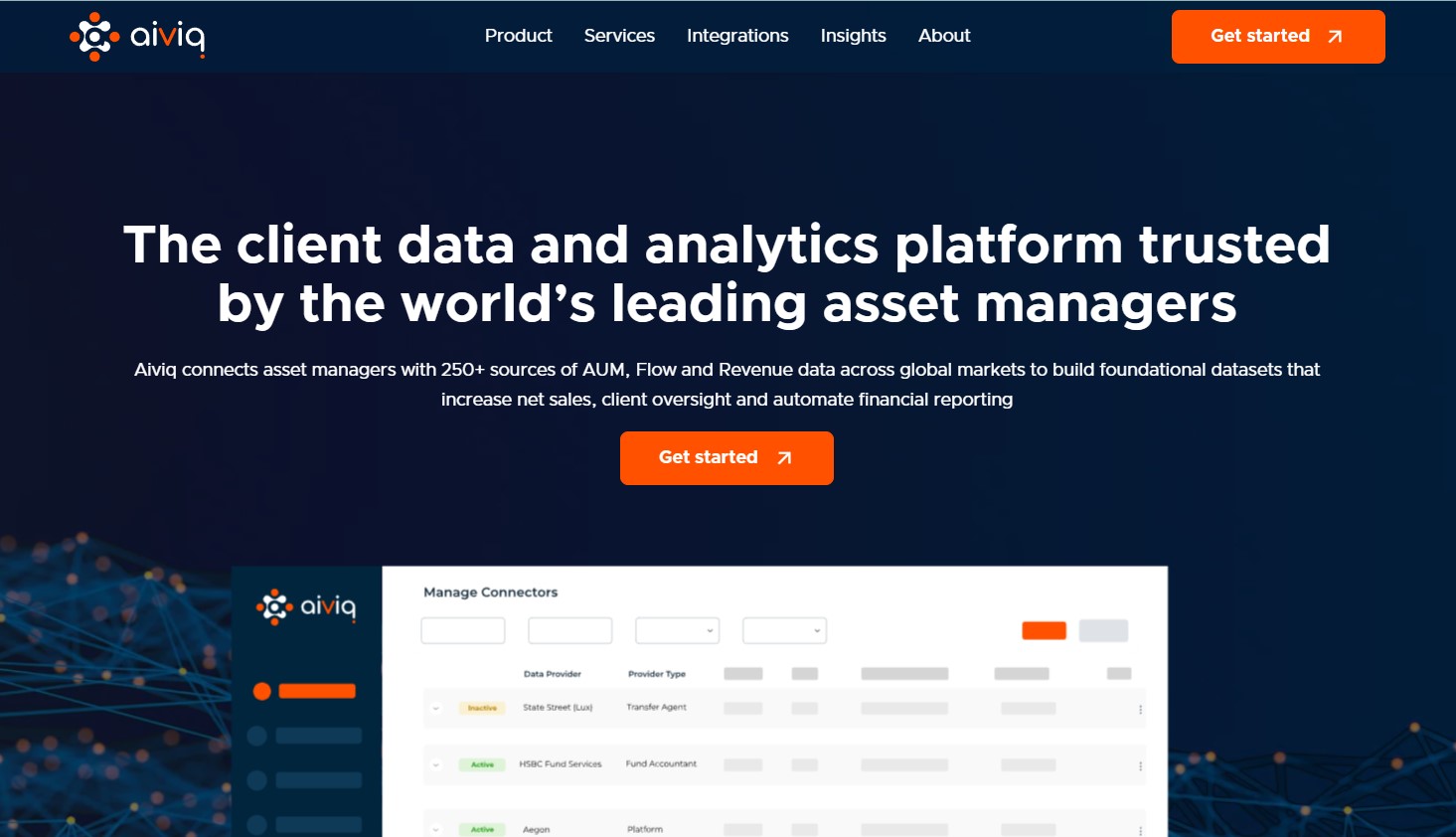
Asset managers accumulate client data across custodians, transfer agents, CRM systems, and regional booking centers, and reconciling that data into one trusted view is a problem every large firm claims to have solved and few actually have solved end to end. Aiviq positions its Intelligence workbench specifically around this gap, covering client masters, account management, assets under management tracking, and flow attribution for sales, risk, and regulatory functions in one connected dataset rather than several partially overlapping ones.
The operational cost of getting this wrong shows up in specific and expensive ways rather than staying theoretical. When distribution, finance, and operations teams each work from a slightly different version of client holdings, sales attribution disputes, regulatory reporting errors, and slow client onboarding all follow directly from that mismatch. A unified CBOR is infrastructure that every downstream reporting and compliance process depends on being accurate, which is exactly why firms keep funding this unglamorous category of project year after year.
A startup win against entrenched vendors
What makes this deal notable is who won it. Aiviq North America only launched in October 2025, meaning Allspring picked a company with roughly ten months of North American track record over established data management and master data management vendors that have served the asset management industry for decades. Sam Iles, Aiviq's Head of North America, called the engagement a reflection of the growing importance of connected, high-quality data across the investment management industry, language that reads as much like relief as confidence given how young the local operation still is.
For a startup this young, landing a firm managing $642 billion is the kind of reference customer that either validates a product category shift or turns into a cautionary tale if the implementation stalls somewhere along the way. Asset managers are notoriously risk-averse about core data infrastructure decisions, so Allspring's willingness to bet on a newer vendor suggests the pain of the status quo, fragmented and unreconciled client data spread across dozens of systems, was severe enough to outweigh the usual preference for an incumbent.
The cloud-native, in-environment pattern again
Notably, the platform runs inside Allspring's own cloud-native environment rather than in Aiviq's hosted infrastructure elsewhere. That is the same architectural pattern showing up across the data platform market this year: vendors deploying application logic into the customer's environment instead of asking the customer to send sensitive data out to them. For a regulated asset manager, that distinction determines which compliance and security review the deal has to pass, and directly affects how fast the overall contract can actually close.
This pattern is becoming table stakes rather than a differentiator for vendors selling into financial services, healthcare, and other regulated sectors this year. Any data platform vendor still asking enterprise buyers in those sectors to move sensitive records into a vendor-hosted environment should expect procurement cycles to get longer every quarter, as security teams increasingly treat in-environment deployment as a baseline requirement to even start the conversation rather than a premium feature worth paying extra for.
What this means for data leaders outside asset management
The specifics here are financial services, but the underlying lesson generalizes to any enterprise with client or customer data scattered across systems that were never designed to agree with each other in the first place. A book of record project is unglamorous, rarely earns a splashy product launch of its own, and is exactly the kind of initiative that gets deprioritized in favor of AI pilots that produce a more exciting demo for the next board meeting.
Allspring's move argues for the opposite prioritization. An AI agent, or a human analyst for that matter, making decisions on top of unreconciled client data will produce unreliable output regardless of how sophisticated the underlying model is. Firms sequencing AI investment ahead of a trusted system of record are building on the same fragile foundation this deal exists to fix, and should expect the same reconciliation costs to surface eventually, just later in the project and considerably more expensively than if they had fixed it first.
The vendor selection lesson worth borrowing
There is a second, quieter lesson in how Allspring structured this decision. Rather than treating client data unification as a feature to bolt onto an existing CRM or reporting stack, the firm procured it as its own platform initiative with a named executive sponsor and a specific architectural requirement, in-environment deployment, set before vendor selection even began. That sequencing, defining the non-negotiable architecture constraint first and then evaluating vendors against it, is a repeatable pattern any data leader can apply to a similar reconciliation problem.
It also explains why a ten-month-old startup could win against incumbents with decades of asset management experience. Aiviq's product was purpose-built to run inside a customer's own cloud environment from day one, while legacy MDM vendors built their architectures around a hosted or on-premises model years before in-environment deployment became a baseline procurement requirement. Retrofitting that architecture after the fact is materially harder than building it in from the start, and that gap is exactly what let a newer, narrower vendor beat broader, older competitors on the one requirement that mattered most.